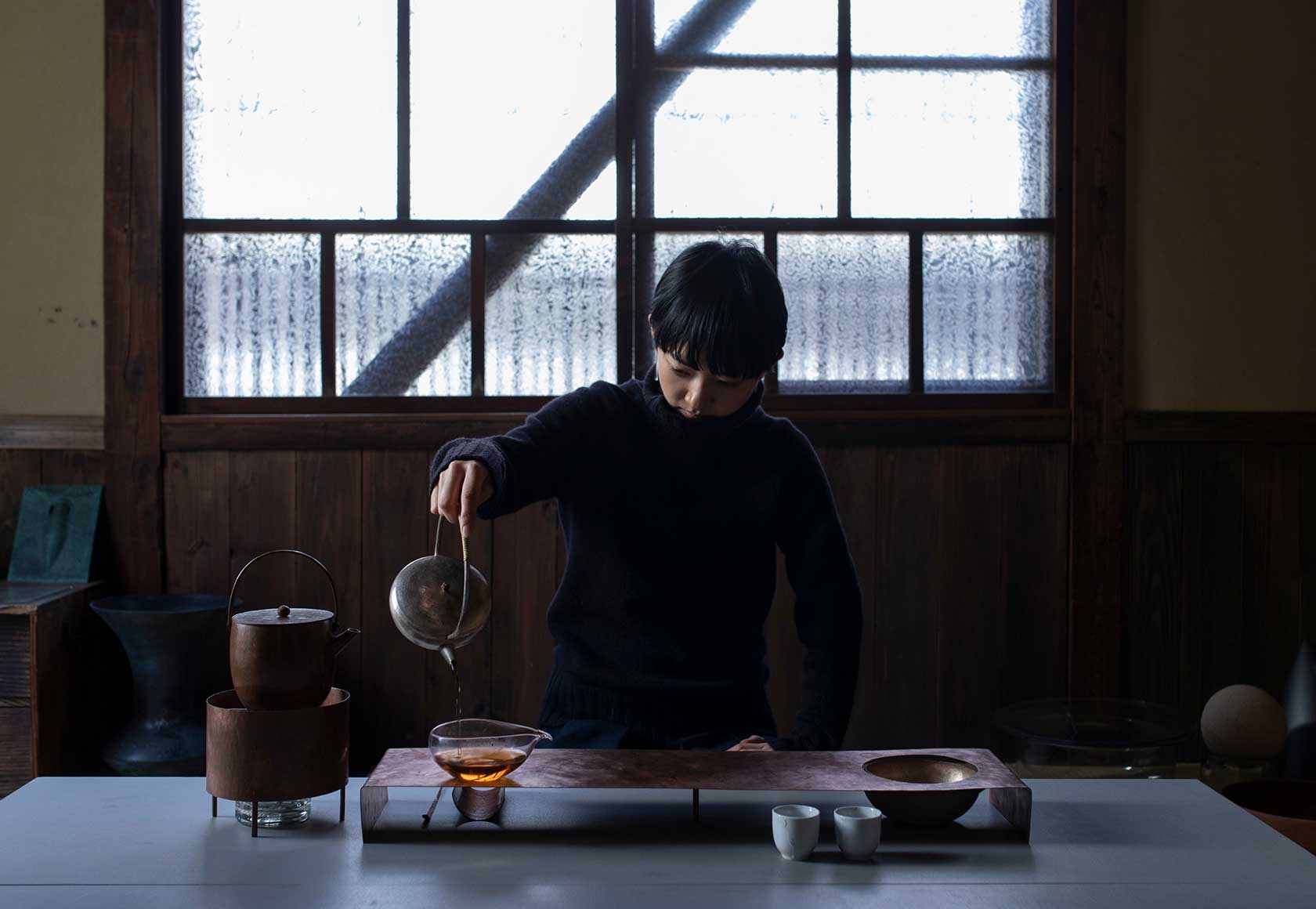
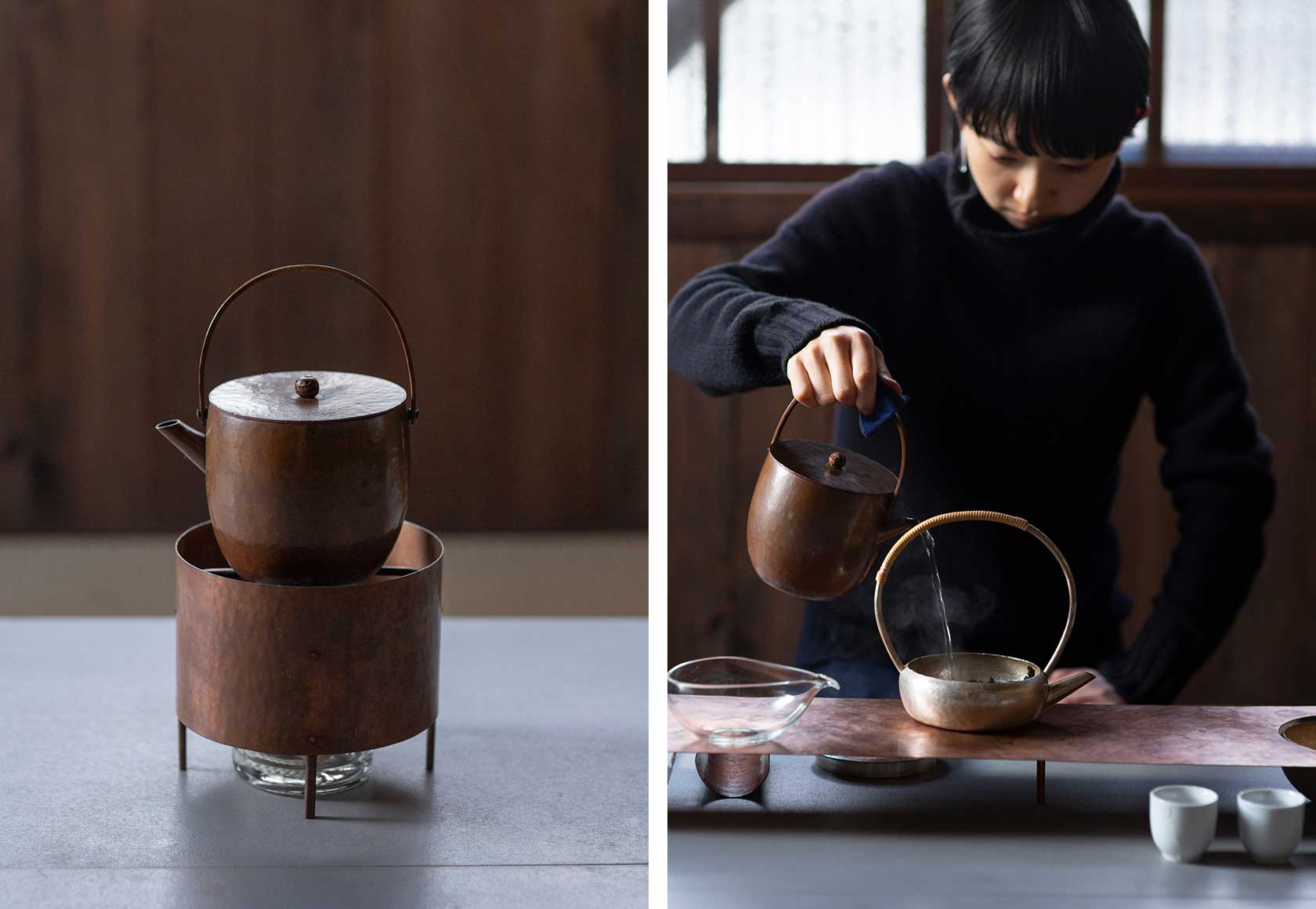
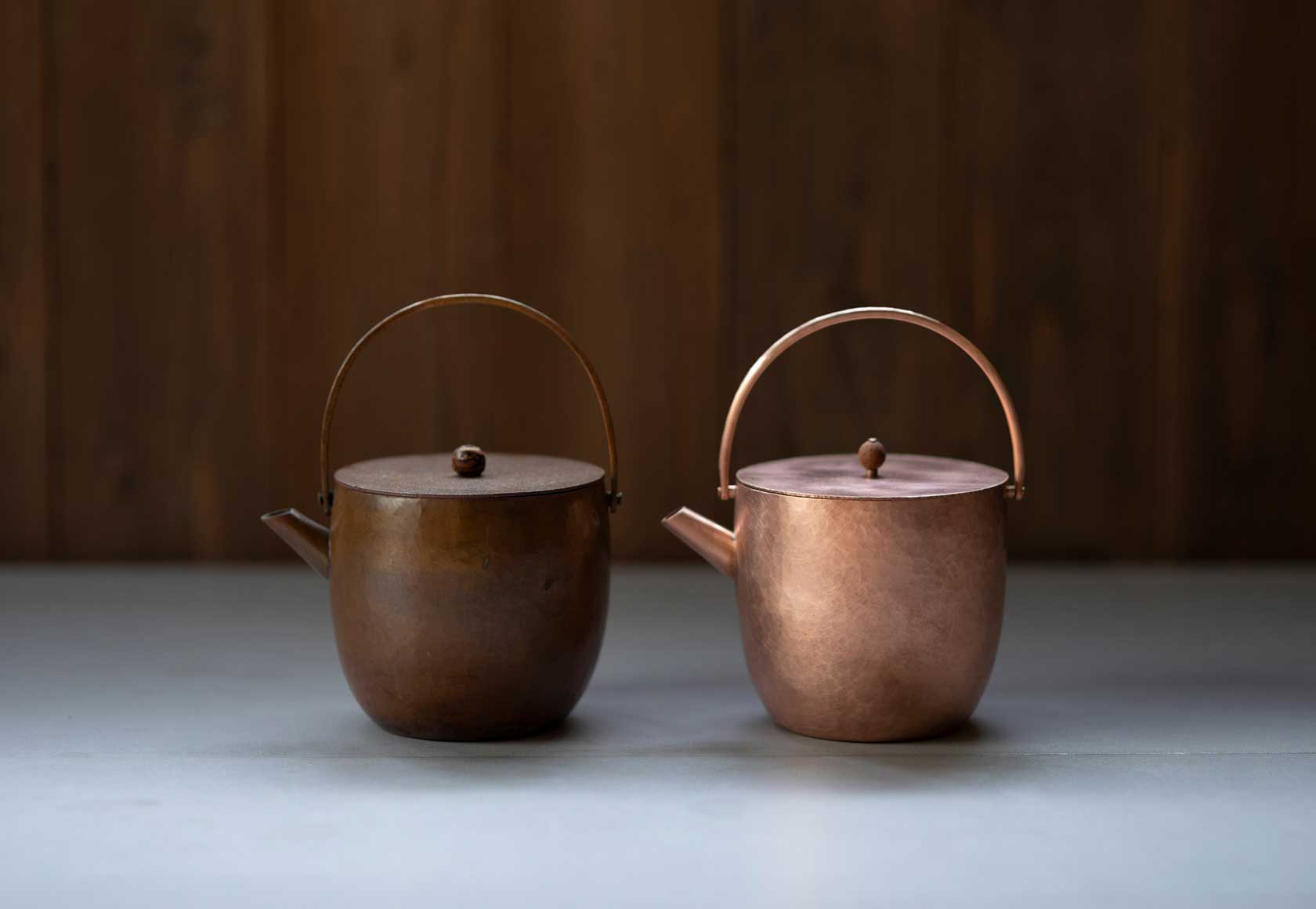
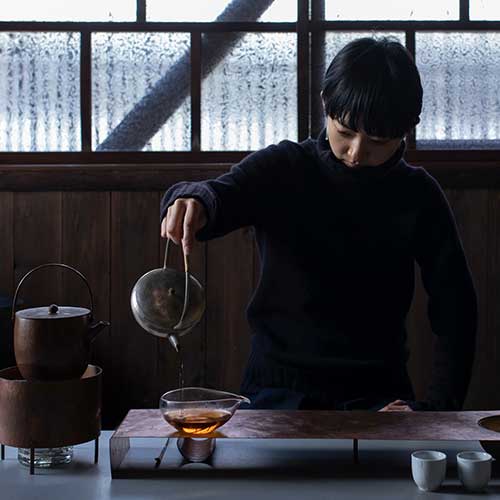
“The very first thing I made was this ‘kettle,’” says Nakamura Yumi as she shows a copper kettle with a rich, matured patina developed over about fifteen years of use.
“When you stroke it by hand, it becomes shiny. So, I always tell people, ‘Please stroke your new kettle every night’ (laughs).”
The kettle Nakamura lovingly nurtured exudes a calm warmth as it rests in the room.
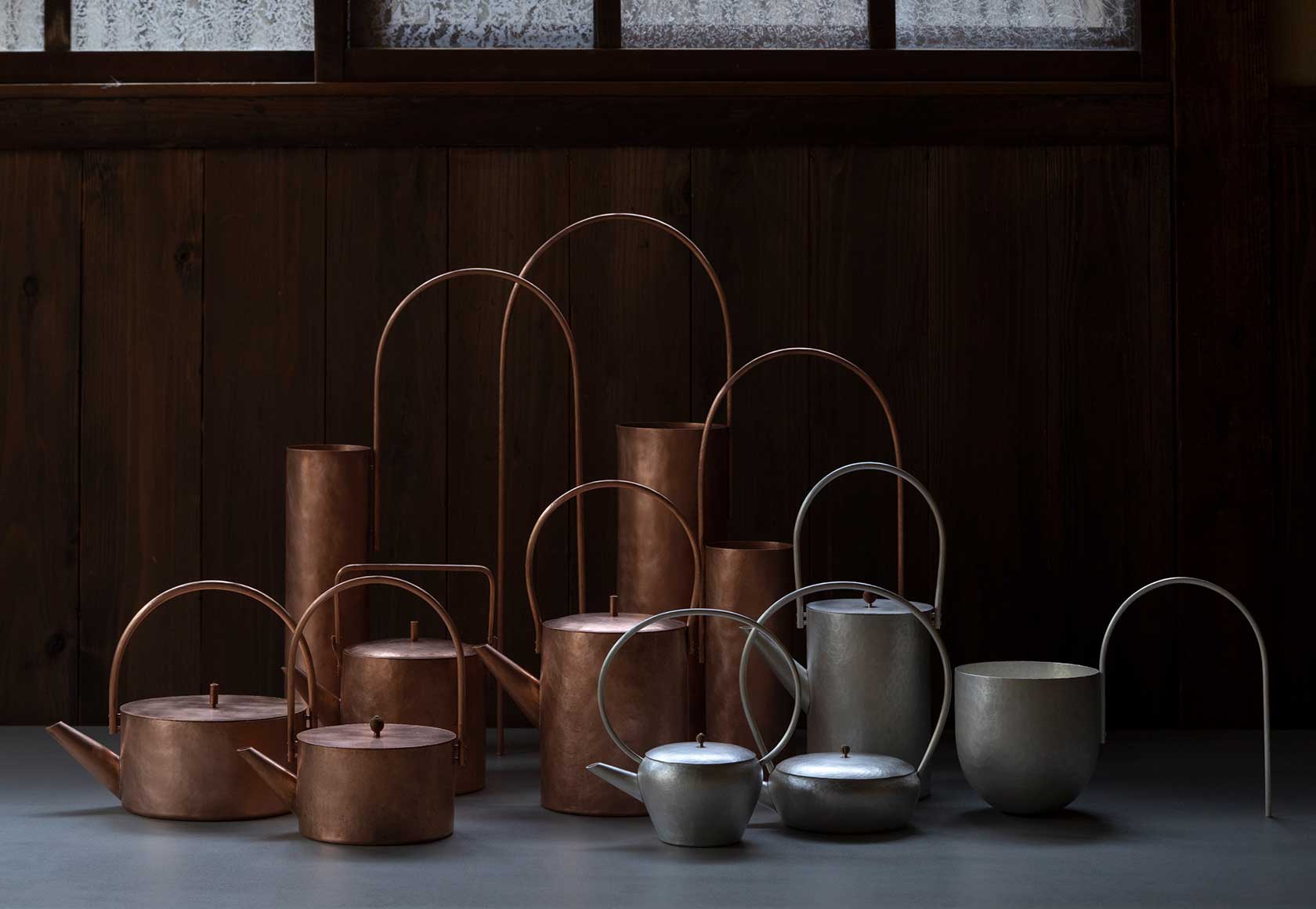
Her motivation for creating the kettle was, “I wanted to make a kettle that you’d be proud to display.”Though kettles are used daily, they are often left out after use. Because they are always visible, Nakamura wanted to create something beautiful to exist in space.Not just for drinking hot water or tea on the table, but also something that could be used for making matcha.She thought it might be nice to have a personal, small-sized kettle.As she carefully designed each size and style, the collection grew to about twenty different types of kettles.
“It’s interesting — the kettles seem to ‘choose’ the person who suits them. Just like picking out clothes, people pick their own kettle.”
Why was Nakamura drawn to kettles?
“That was what led me to start metalworking. It all began when I encountered the work of a certain metalsmith. They were making truly wonderful tea utensils...”
At that time, Nakamura was living in Aichi Prefecture. After graduating from an art university in Tokyo, she went to work for a large manufacturer based in Tokoname. Although she took part in large projects at the company, she still felt unsure about her own future. Then she visited “gallery feel art zero” in Nagoya (now Gallery Nao Masaki), where she encountered works by people creating things with their own hands.
“Unlike a museum, there were works by living artists close at hand. It was the first time I realized that a place like a gallery existed. That’s where I saw the works of metalsmiths and became fascinated.”
Looking around, one sees that Tokoname, a famous pottery region, is home to many active ceramic artists.
“They could take today’s ideas and give them form by tomorrow. Their minds and hands worked as one. I was strongly drawn to that cycle of creation.”
Although her university had a crafts department, Nakamura majored in interior design and says she had no interest in making things during her studies. She had never even encountered metalwork. Still, without hesitation, she quit the company after three years and returned to Tokyo.
“I simply wanted to devote myself to metalworking.”
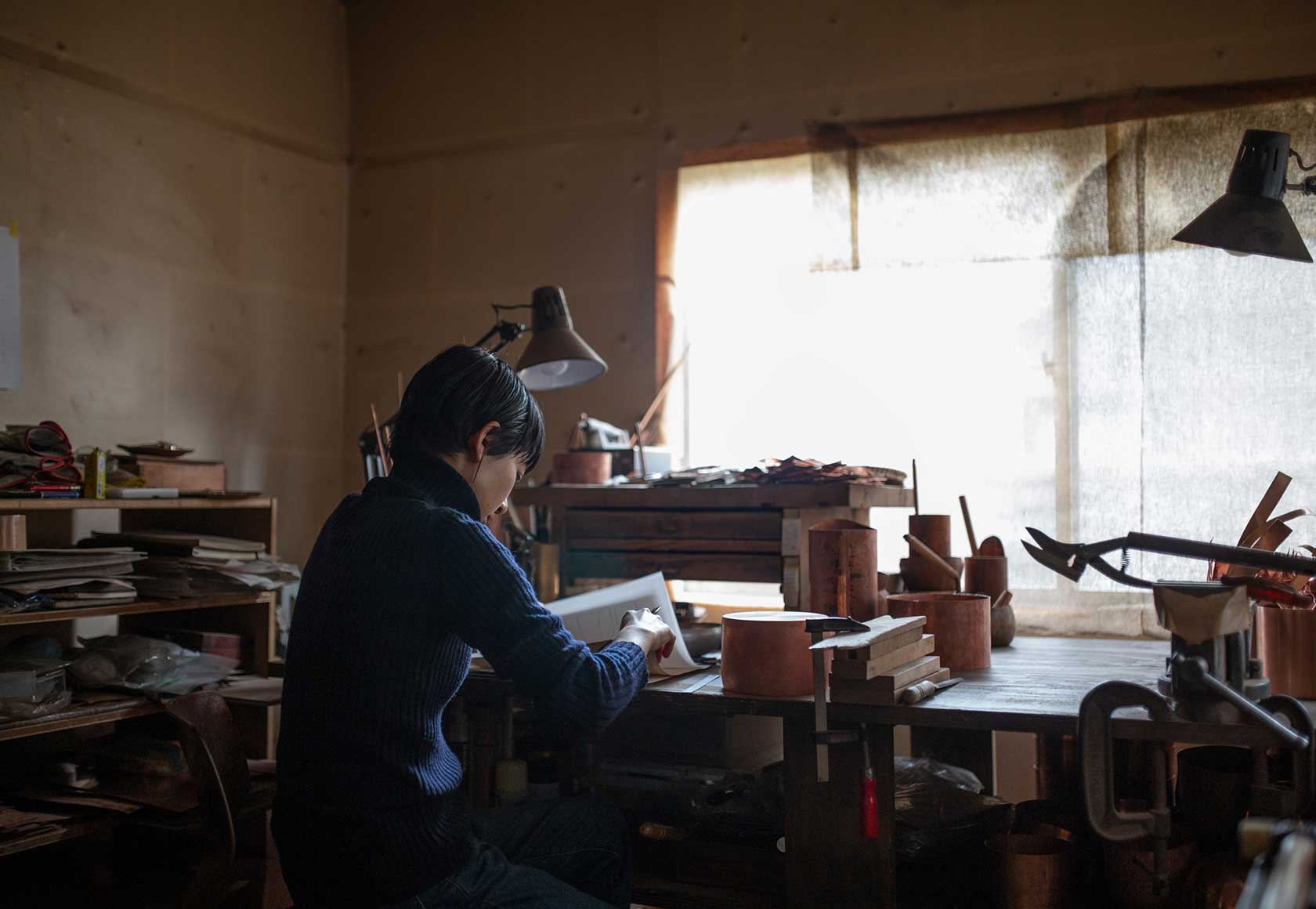
Soon after, she enrolled in the “Aoyama School of Jewelry and Metalsmithing,” where her former university teacher taught hammering. There, she learned the fundamentals of hammering metal from scratch. Her first kettle, made at that time, was shaped by hammering sheets of copper. With this very first kettle, she attended an interview at an interior design firm. She worked there diligently for six days a week and went to metalwork school on Sundays.
“I was exhausted, holding a hammer without rest. I kept asking myself what I was doing, since no one was demanding this from me. But I couldn’t give up on living as a maker.”
After working at the design firm for two years, she moved to Nara in 2012 and began creating her works in earnest.
Metalwork artist. Born in 1981 in Saitama Prefecture. Graduated in 2005 from the Interior Design Course, Department of Industrial, Interior and Craft Design, Musashino Art University. After graduation, lived in Tokoname City, Aichi Prefecture for three years. Returned to Tokyo in 2008 and began working with metal. While employed at an interior design firm, continued her artistic practice. In 2012, relocated to Nara Prefecture and started full-time creation.