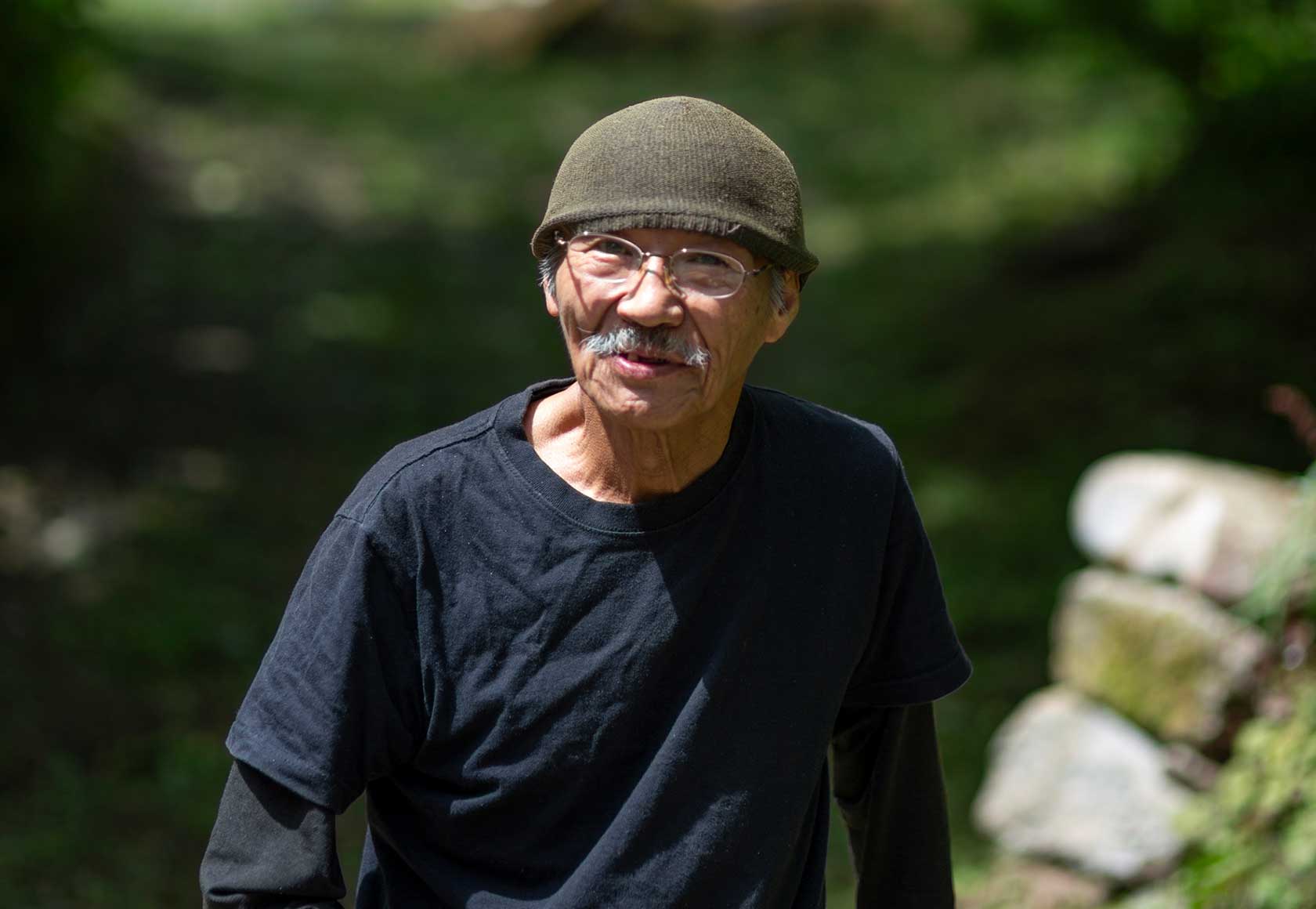
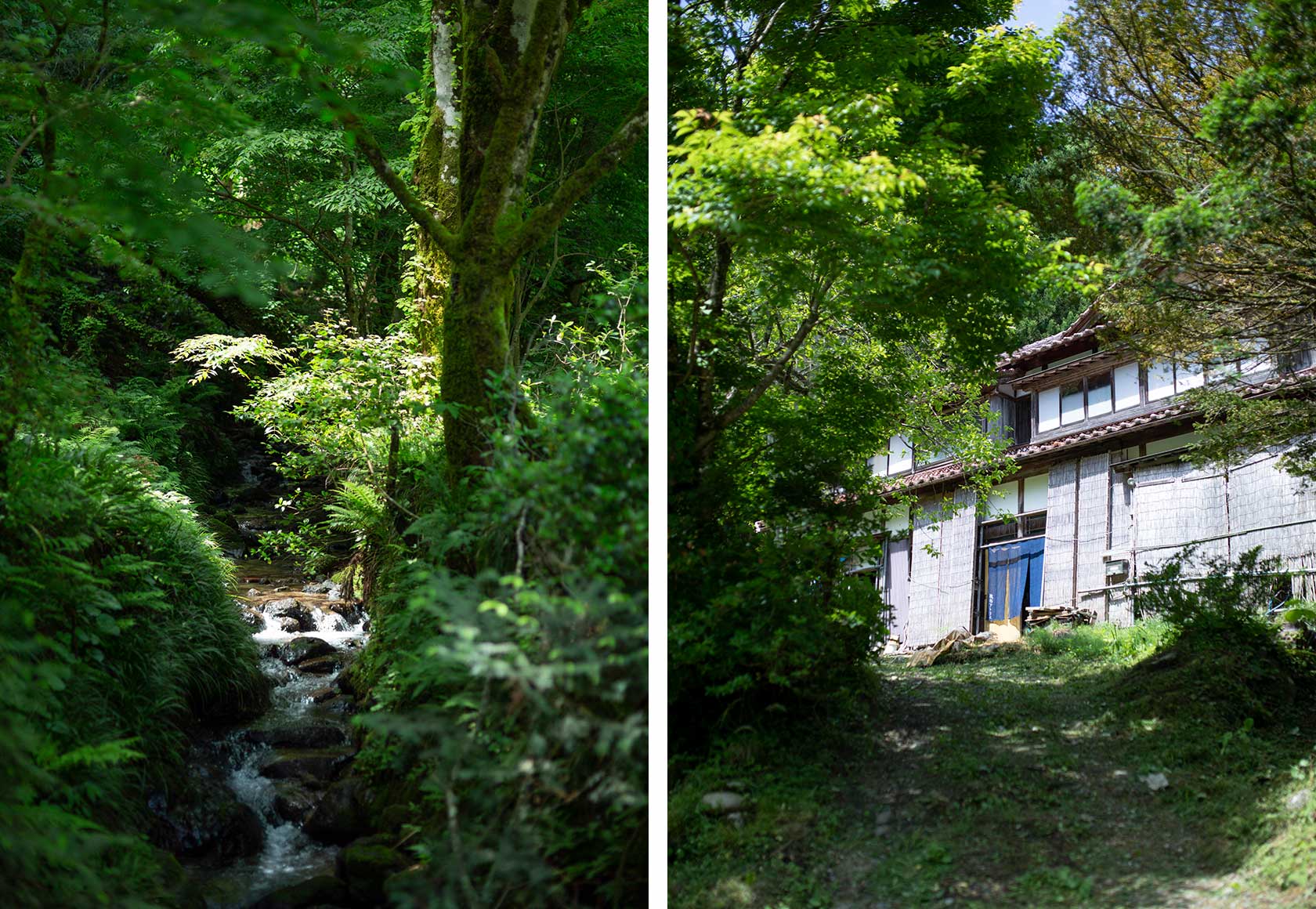
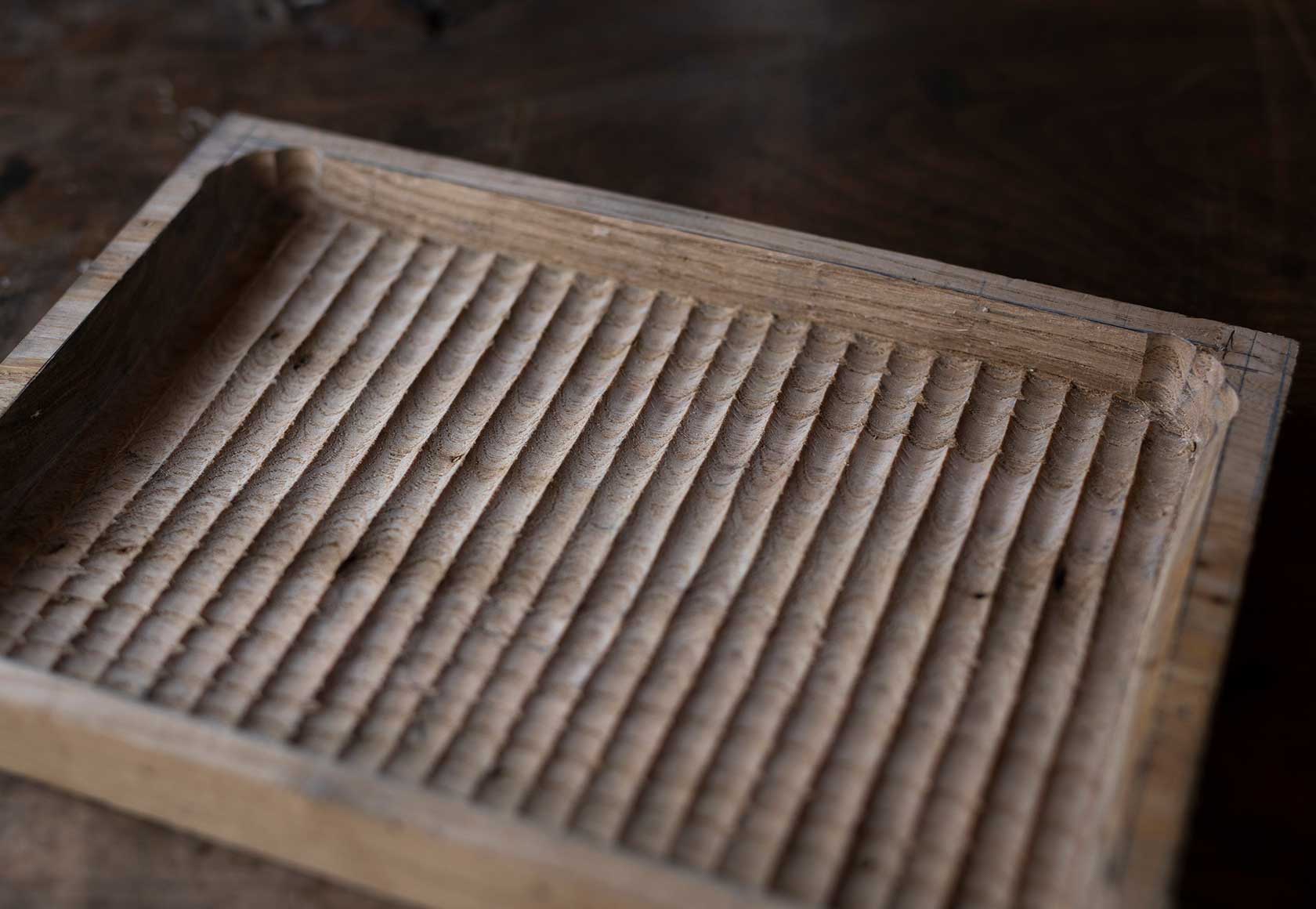
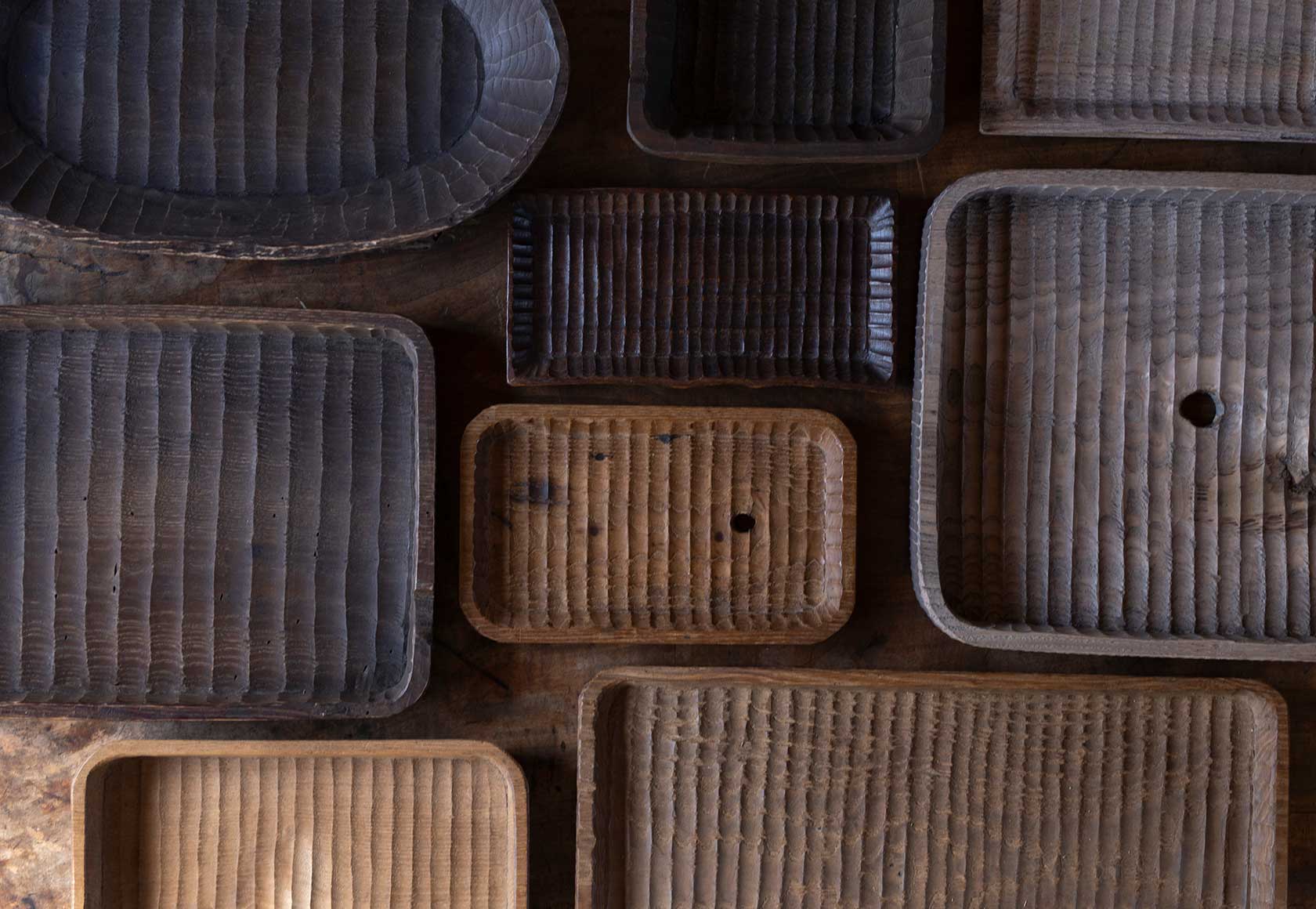
このアトリエに森口さんが滞在するのは、毎週土曜日から月曜日まで。展示会などの予定がない限り、京都の自宅から4〜5時間かけて車を走らせてくる。その他の日は、京都の西山高原にあるもう一つの工房へ。仕事を休むという日はほぼないそうで、来る日も来る日もひたむきに「我谷盆」と呼ばれる栗の盆を制作している。その盆のいちばんの特徴は、無垢板の木目に対して垂直方向に残す鑿跡。平行線の連なりに素朴な美しさや力強さが現れる。
我谷盆は、かつて風谷に隣接していて、1965年に我谷ダムに沈んだという我谷村で、江戸時代からつくられていた暮らしの道具である。明治・大正期に撮られたという山中温泉街の写真を見ると、木端葺きと呼ばれる薄い板で屋根を葺いた家々が、ひしめくように建っている。その屋根の板材を生産していた我谷村では、冬の積雪期に端材で自家用の盆がつくられるようになり、それが我谷盆の始まりといわれる。水に強くて腐りにくい栗を主に、松、欅なども使われたそうだ。
「今は丸太を楔で割って板にしています。“栗の割り板を生木のまま彫る” のが、昔からの我谷盆のつくり方。アトリエに習いに来る塾生に、そういうつくり方を教えています」と森口さん。
Moriguchi stays at this atelier every week from Saturday to Monday. Unless he has exhibitions or other commitments, he drives four to five hours from his home in Kyoto to come here.On other days, he works at another workshop located in the Nishiyama Highlands near Kyoto. He rarely takes a day off, spending his time carefully crafting wagatabon, chestnut wood trays. The most distinctive feature of these trays is the chisel marks left vertically across the grain of wood. These parallel lines create rustic beauty and strength.
The wagatabon originated in Wagatani Village, which once bordered Kazetani but was submerged beneath the Wagatani Dam in 1965. These trays were made as everyday utensils since the Edo period (1603–1868). Photographs from the Meiji (1868–1912) and Taishō (1912–1926) periods show the Yamanaka Onsen townscape, densely lined with houses roofed in thin wooden shingles known as koba-buki. Wagatani Village produced these shingles, and during the snowy winters, villagers would use leftover scraps of wood to make their own household trays—this is said to be the beginning of wagatabon. The trays are mainly made from chestnut wood, known for its resistance to water and decay, as well as pine and zelkova.
“Nowadays, we split logs into boards using wedges. Carving freshly cut chestnut boards while they still hold their moisture is the traditional method of making wagatabon. I teach this method to the students who come to my atelier,” says Moriguchi.
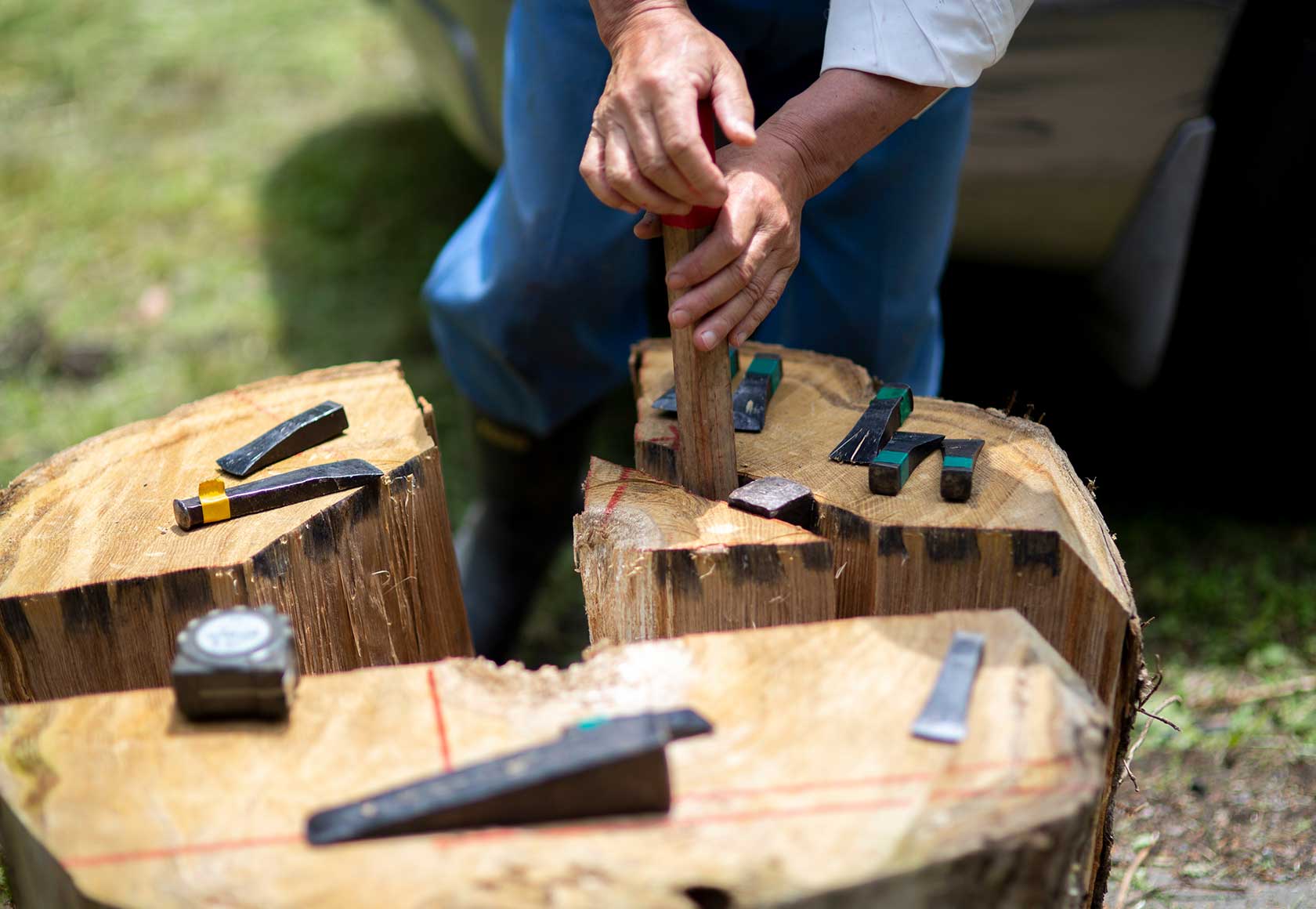
外の空き地では、森口さんと塾生が直径68センチもある栗の大木をまさに丸太から楔で打ち割るところ。この大木は樹齢60〜70年ほどで、富山県栃折の標高600メートル以上、冬は雪が積もるという風谷と似たような環境から切り出されたもの。乾燥させていない栗の生木はかなりの重量である。
これほどの大径木であっても、金かなや矢と呼ぶ鉄製の楔で割っていく。いくつもの楔をハンマーで叩いて打ち込み、ある程度のところまで割れたら、大きな楔に変えて、さらに深く打ち込んでいく。木の繊維に沿って割れが進み、最後は木製の楔を使って割り裂いた。この手工具だけを使うやり方で、丸太をいくつかの塊に分断。さらに木目や木の傷などの素性を見ながら割っていくと、形も厚みもさまざまな板になる。
こうして同じものは2つないと言われる我谷盆の素地ができていく。「“木元竹末” というのが昔からの口伝でね、木を割る時は根元の方から、竹は末(先端)の方から割ると、割れやすいし、割れた肌もきれいになるんです」と森口さんが教えてくれる。
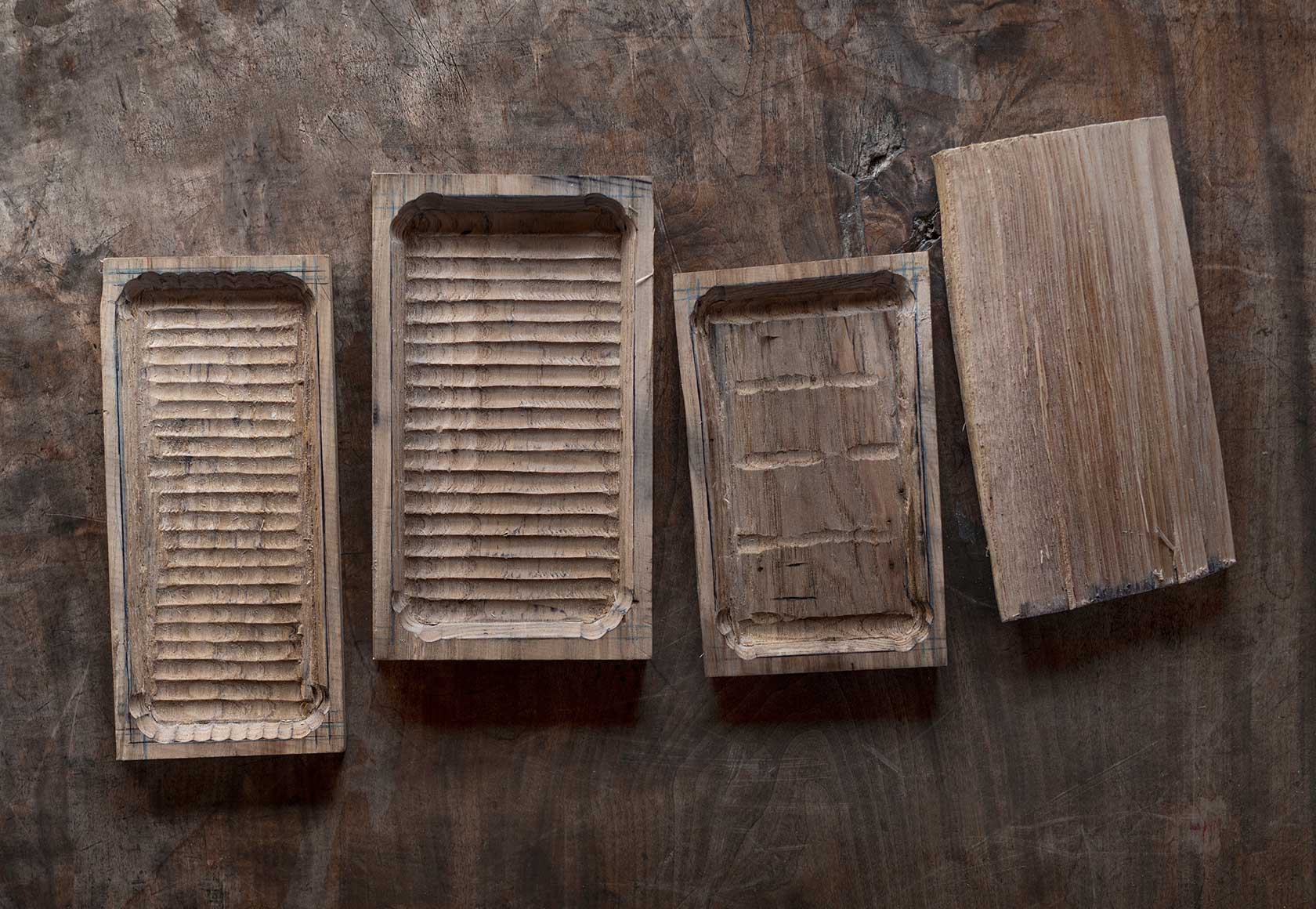
栗の木は乾燥すると堅くなるため、割った板が水分を含んでしっとりとしている間に、荒彫りを済ませる。そのタイミングは木の状態や天候を見ながらで、荒彫りの後は、ほどよく乾燥させてから本彫りをする。
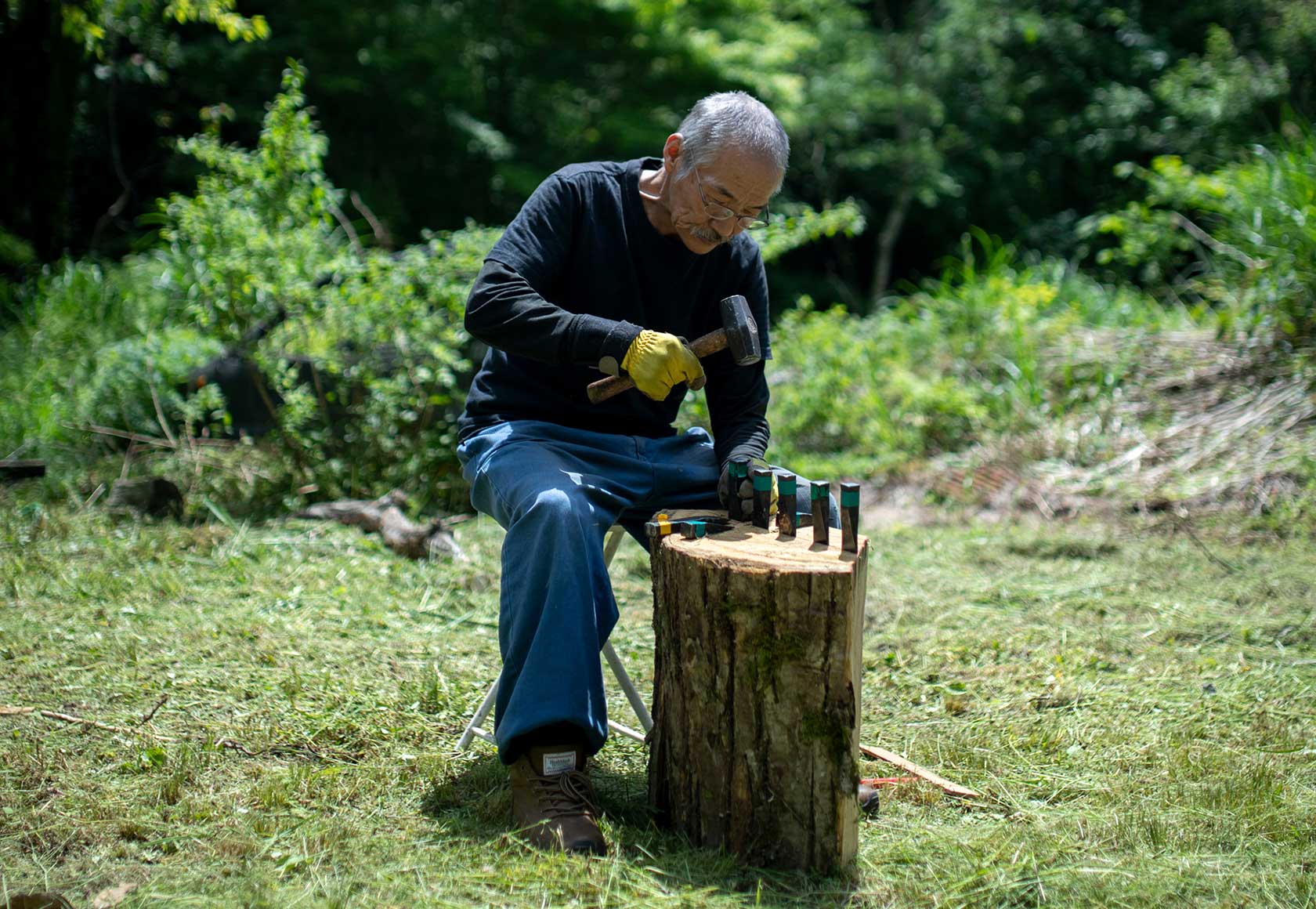
「我谷盆は彫る道具も簡単で、木槌と鑿があれば誰でも彫れます。鑿を持ったことがないという初心者でも彫れるようになりますから」と力強く語る森口さん。
気がつけば、この日は6人の塾生が出入りしていた。地元や県内の各所から集まっているそうで、アトリエに通い始めて年月の浅い人もいるし、7〜8年通うベテランもいる。
森口さんは道具の使い方やポイントを説明しつつ、自分の頭で考えることの大切さを伝える。森口さん自身、長年にわたって答えのわからないところから、我谷盆のつくり方を一つ一つ自分で考えて見つけてきた。その過程がものづくりの大切な支えになっていると実感しているからだ。
Outside, Moriguchi and his students are splitting a large chestnut tree trunk, about sixty-eight centimeters across, driving wedges directly into the log. This large tree, around sixty to seventy years old, was felled in Tochiori, Toyama Prefecture—an area over six hundred meters above sea level, where snow piles up in winter—a landscape like Kazetani. Fresh, undried chestnut wood is astonishingly heavy.
Even such a large tree is split using iron wedges called kanaya. Several wedges are hammered in one after another; once the split begins to run, larger wedges are used to drive it deeper. The split follows the grain of the wood, and finally, wooden wedges are used to complete the split. Using only these hand tools, the log is divided into several chunks. Then, by observing the grain and any imperfections in the wood, they continue splitting, resulting in boards of various shapes and thicknesses. This process produces the base for wagatabon, no two ever alike.
“There’s an old saying, ‘ki-moto take-sue’ (literally, ‘wood from the base, bamboo from the tip’). When splitting wood, you start from the root, and when splitting bamboo, you start from the tip. This makes it easier to split and results in a cleaner surface,” Moriguchi explains.
Because chestnut hardens as it dries, rough carving must be done while the boards are still damp and supple. The timing depends on the wood’s condition and the weather. After rough carving, the pieces are allowed to dry to a suitable level before the final carving.
“Wagatabon carving requires only simple tools—a wooden mallet and chisels—so anyone can learn. Even beginners who have never held a chisel before can get the hang of it,” Moriguchi says confidently.
That day, six students came and went. Some were new, while others had been studying with him for seven or eight years, traveling from nearby towns across the prefecture. Moriguchi teaches how to use tools and important techniques but emphasizes the importance of thinking independently. He himself spent years rediscovering the lost methods of wagatabon through trial and error, learning by doing when no answers were available. That process, he says, has become the foundation of his craft.