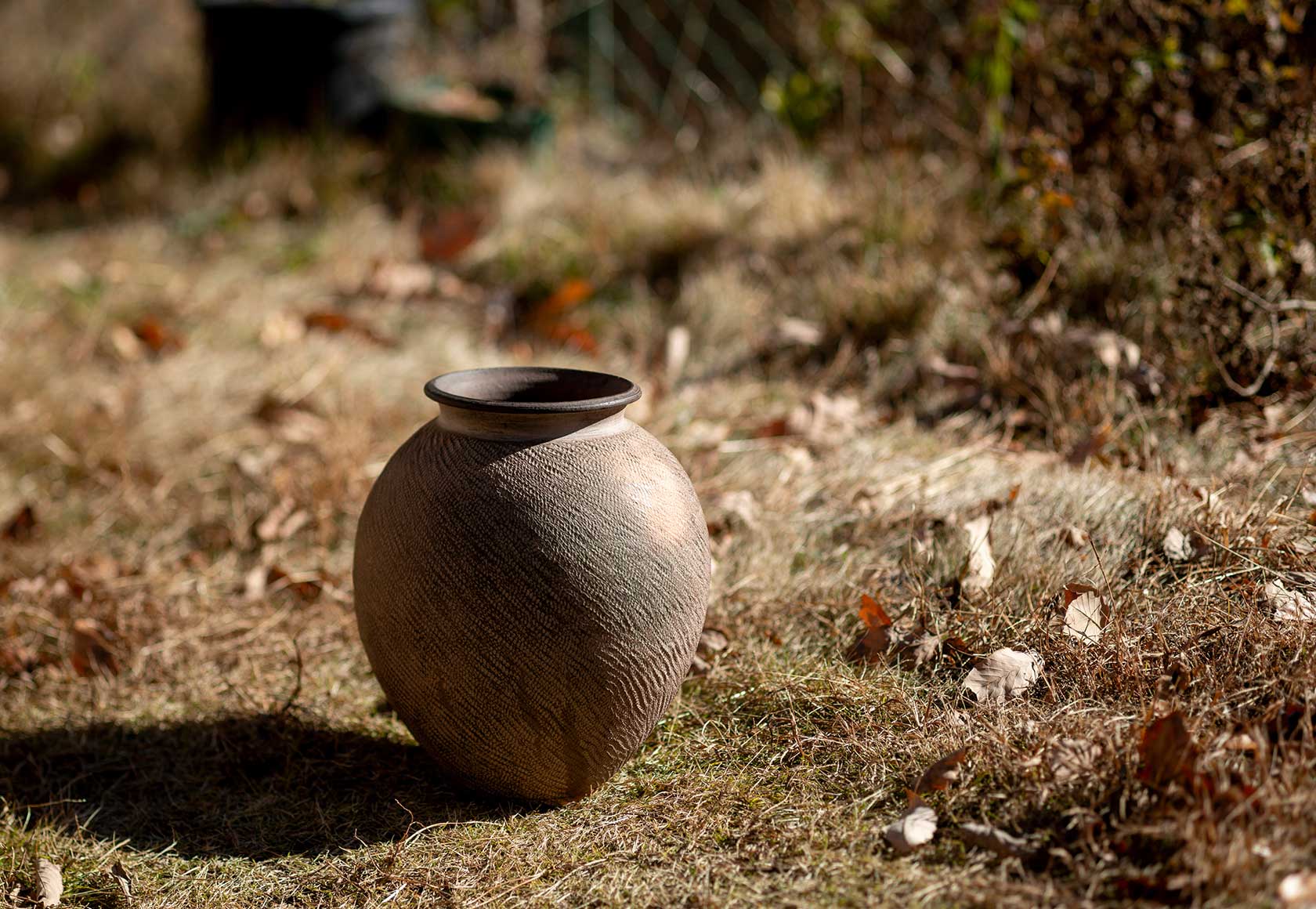
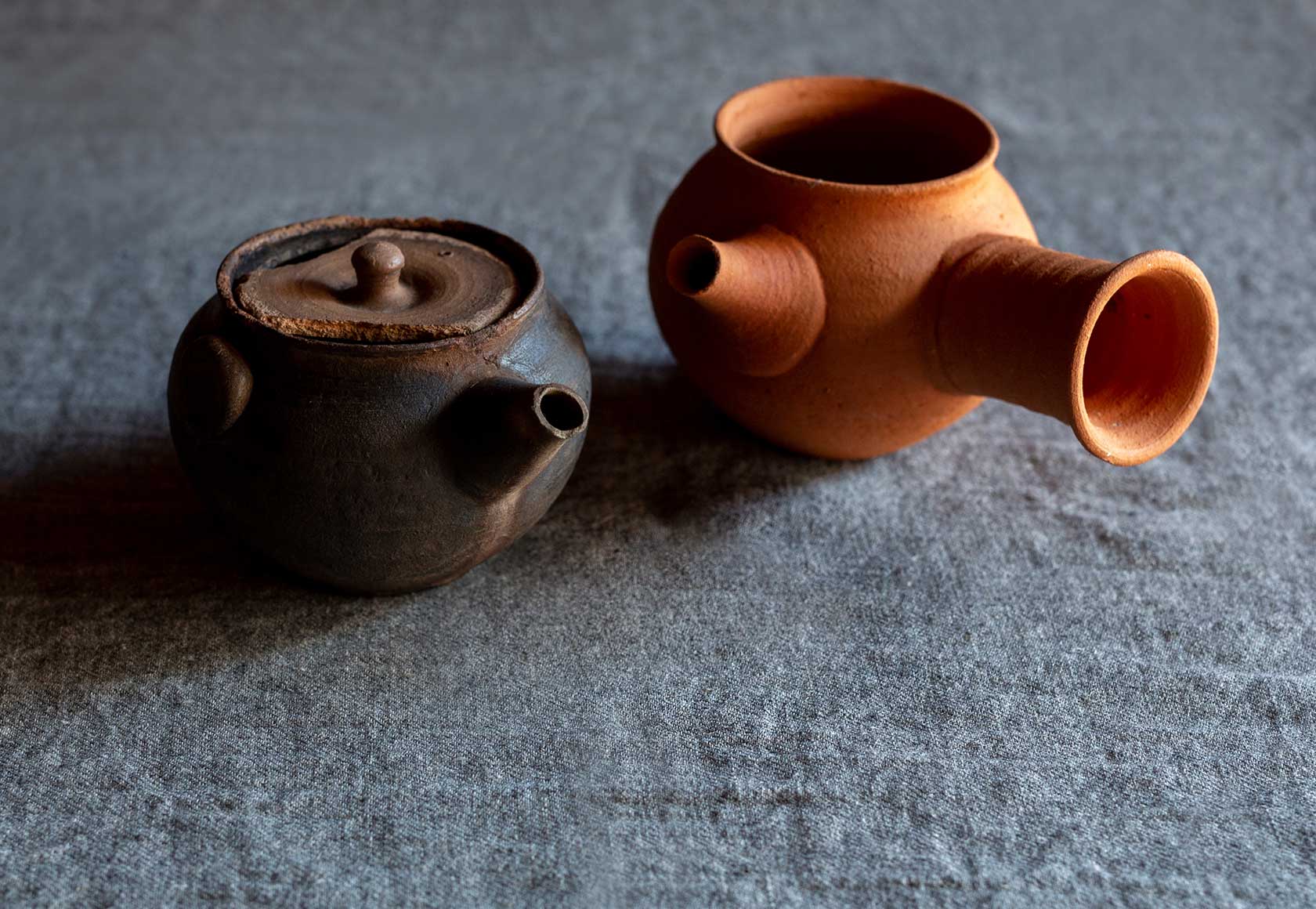
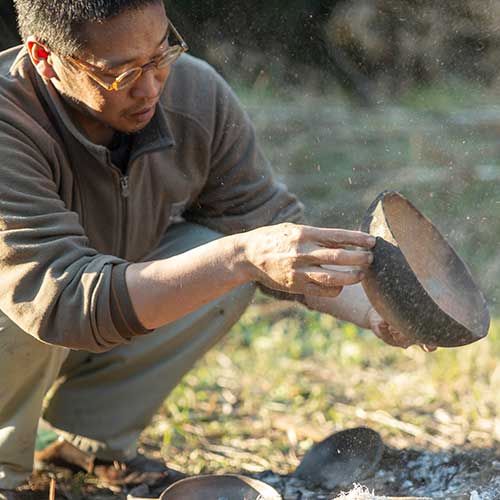
When we think of ceramic artists, most work with porcelain or stoneware, so specializing in doki (earthenware) is quite rare. Kumagai Yukiharu, who has been making earthenware since his student days, has now been active in his field for twenty years."Back then, I had never heard of anyone pursuing it professionally, and people worried that I wouldn’t be able to make a living with earthenware," Kumagai recalls.
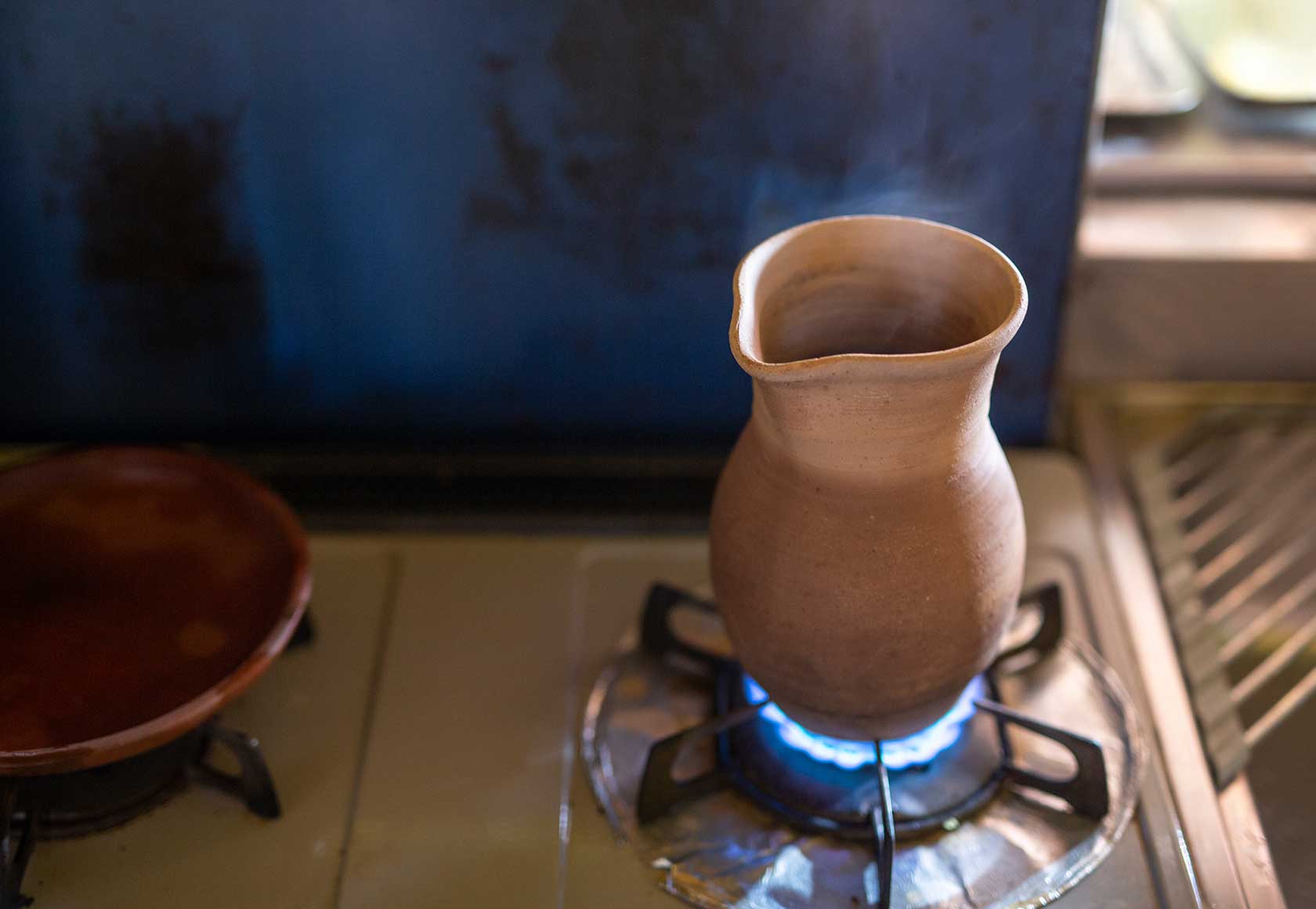
In an age when tools are expected to be functional and practical, earthenware is often seen as something from a distant past, unrelated to daily life. Even looking around, few earthenware pieces are used daily. However, if you have ever experienced the thrill of seeing earthenware at a museum or exhibition, you may realize that the charm of earthenware lies in something beyond its function as a tool.
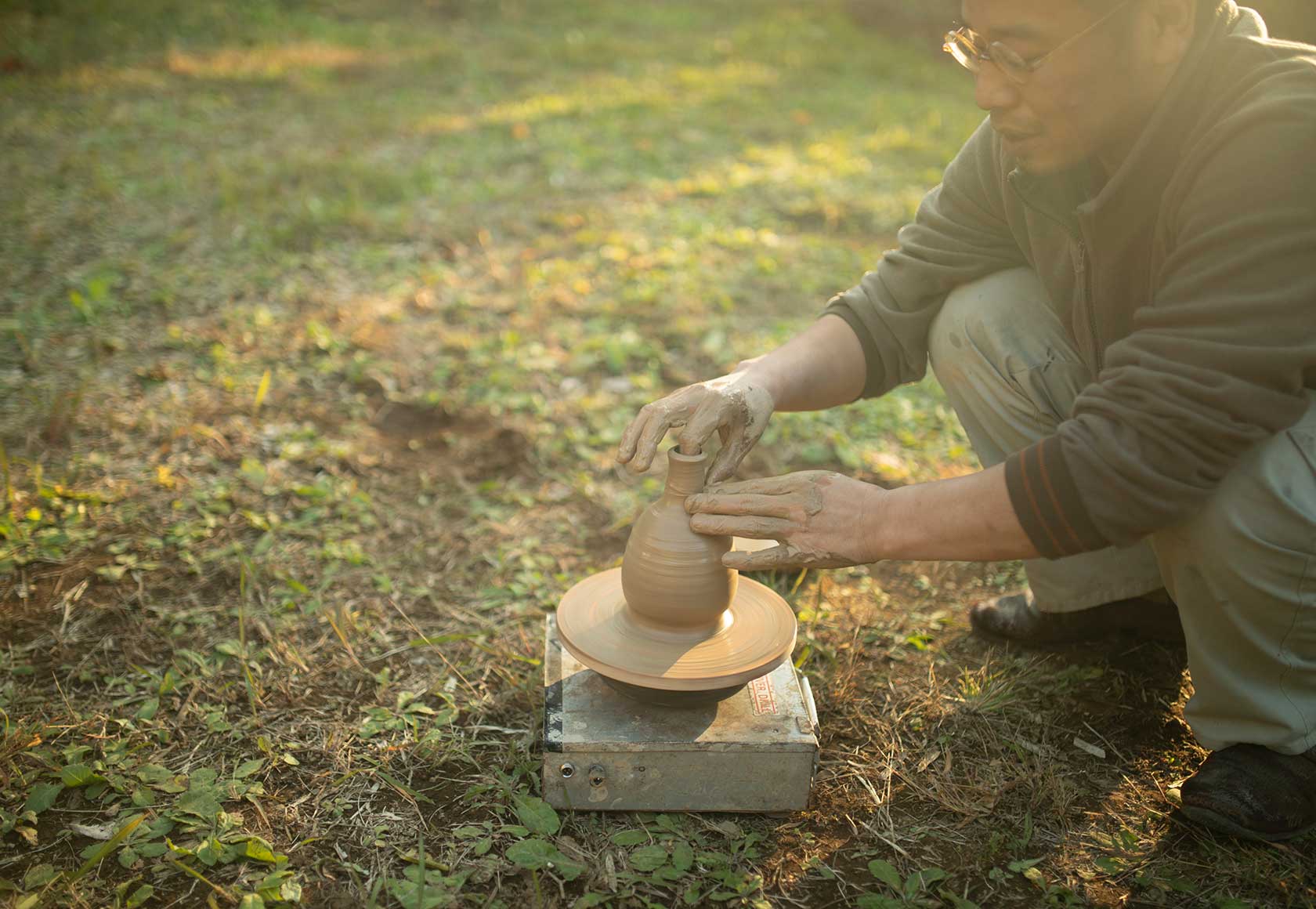
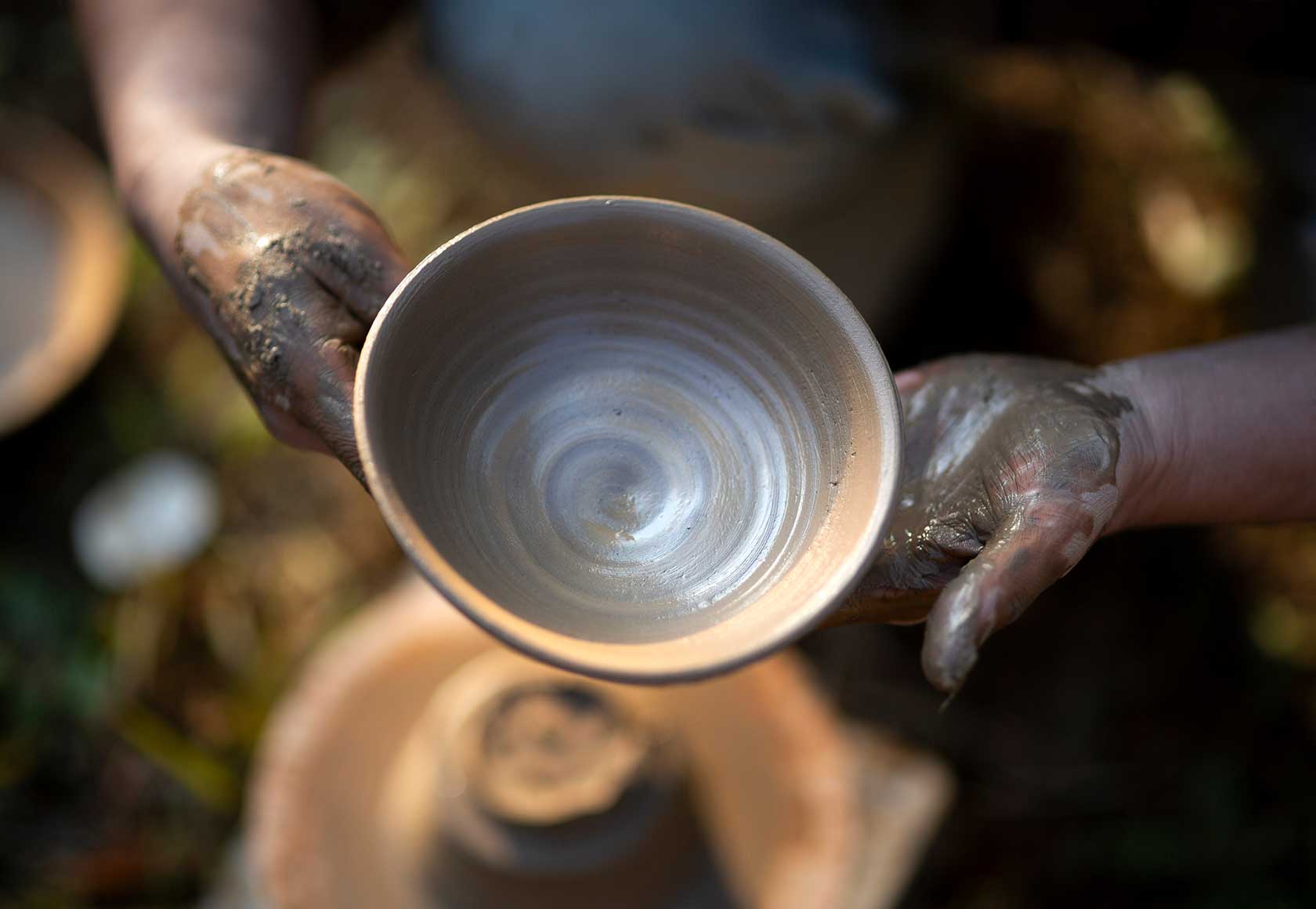
“I feel that the people who made earthenware in the past were less concerned with firing methods and more attuned to the soil itself. Before I encountered earthenware, I was making pottery, and the reason I started was simply because I enjoyed touching the clay. I love clay,” says Kumagai.
When he had to decide his path in high school, a friend’s suggestion led him to apply to art university. Fascinated by technique and design, he enrolled in the craft course of the Industrial Design Department and majored in ceramics.
“I always enjoyed working with clay, but I was disappointed by the results after firing. Back then, we used electric kilns, and the pieces came out very plain and hard... I wished they would keep the soft feel of the clay as it was when making the piece.”
For Kumagai, it is less about making shapes and more about bringing out the life contained within the clay. He couldn’t really get passionate about things that were fired hard and rigid. However, he planned to become independent as a ceramic artist, so he traveled around Japan visiting pottery centers. Despite visiting many kilns, he didn’t find the kind of work that truly resonated with him, and frustration grew.
“One day, I happened to enter a museum and saw some earthenware. I still remember that moment clearly. It was when I realized earthenware is also a type of ceramic. I’m not sure if it was a sense of connection to my roots, but when I saw Jōmon earthenware, I was struck. I had seen many types of ceramics, but the Jōmon ones felt the most right to me.”
The exhibition he saw traced the evolution of ceramics from the Jōmon period to the present day, but to Kumagai, nothing surpassed the Jōmon works.
“Most people focus on the shapes or decorations of Jōmon earthenware, but as a ceramicist, I was attracted to the clay after firing, so unmistakably earthy. That’s why I decided to go all in on earthenware.”
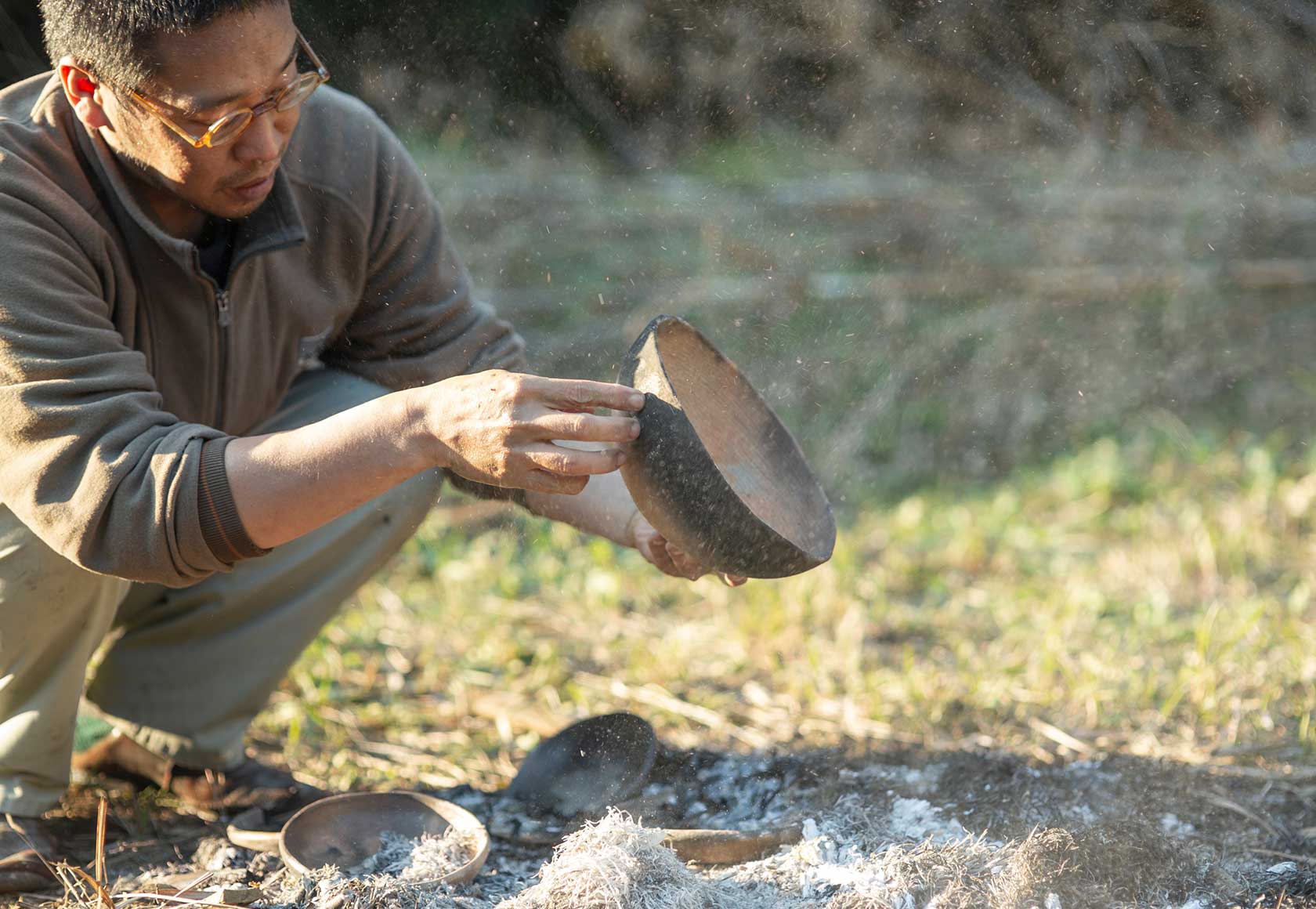
Kumagai compares the difference between stoneware and earthenware to candy and sugar cubes. Stoneware is fired at high temperatures above 1000℃, causing the clay’s components to melt and vitrify like candy.Earthenware, fired at a lower temperature of 600–900°C, melts only partially on the surface and fuses like sugar cubes sticking together. This is why earthenware feels closer to raw earth.
When Kumagai began making earthenware at university, the kiln became an issue. Because the firing temperatures typically used by other students were different from those for earthenware, it was impossible to fire them together.
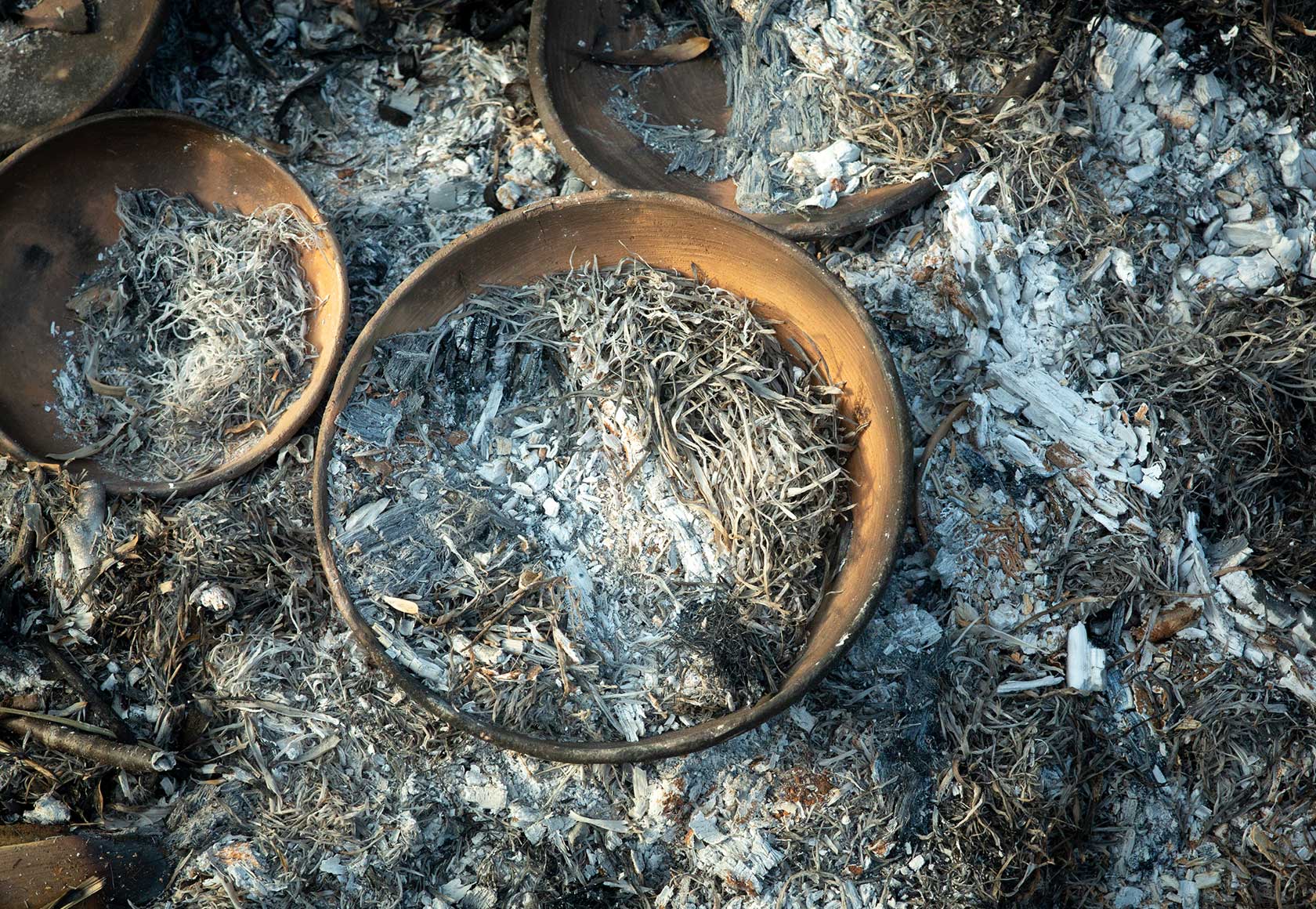
“Since it was a shared kiln, I couldn’t fire my work alone, so I was looking for another way. Then, I found an incinerator,” he laughs. “When I asked about it, I learned it reached around the right temperature for earthenware. I thought that would work, so I had my pieces fired there.”
Doki (Earthenware) Artist. Born in 1978 in Kanagawa Prefecture. Graduated from the Craft Course, Department of Industrial, Interior and Craft Design, Musashino Art University. Currently a part-time lecturer. During his studies, Kumagai was deeply impressed by Jōmon-doki —earthenware made during the Jōmon period (c. 13,000–300 BCE)— and began creating his own. He produces a wide range of works, including earthenware vessels, dogū (clay figurines), clay masks, haniwa (terracotta figures), and paintings made with mud. He also creates sun-dried pieces that are left unfired. His practice revolves around a fundamental question: Why did humans shape clay, fire it, use it, and then break it? His themes focus on the usefulness and psychological resonance of earth and the qualities of earthenware in the present day.