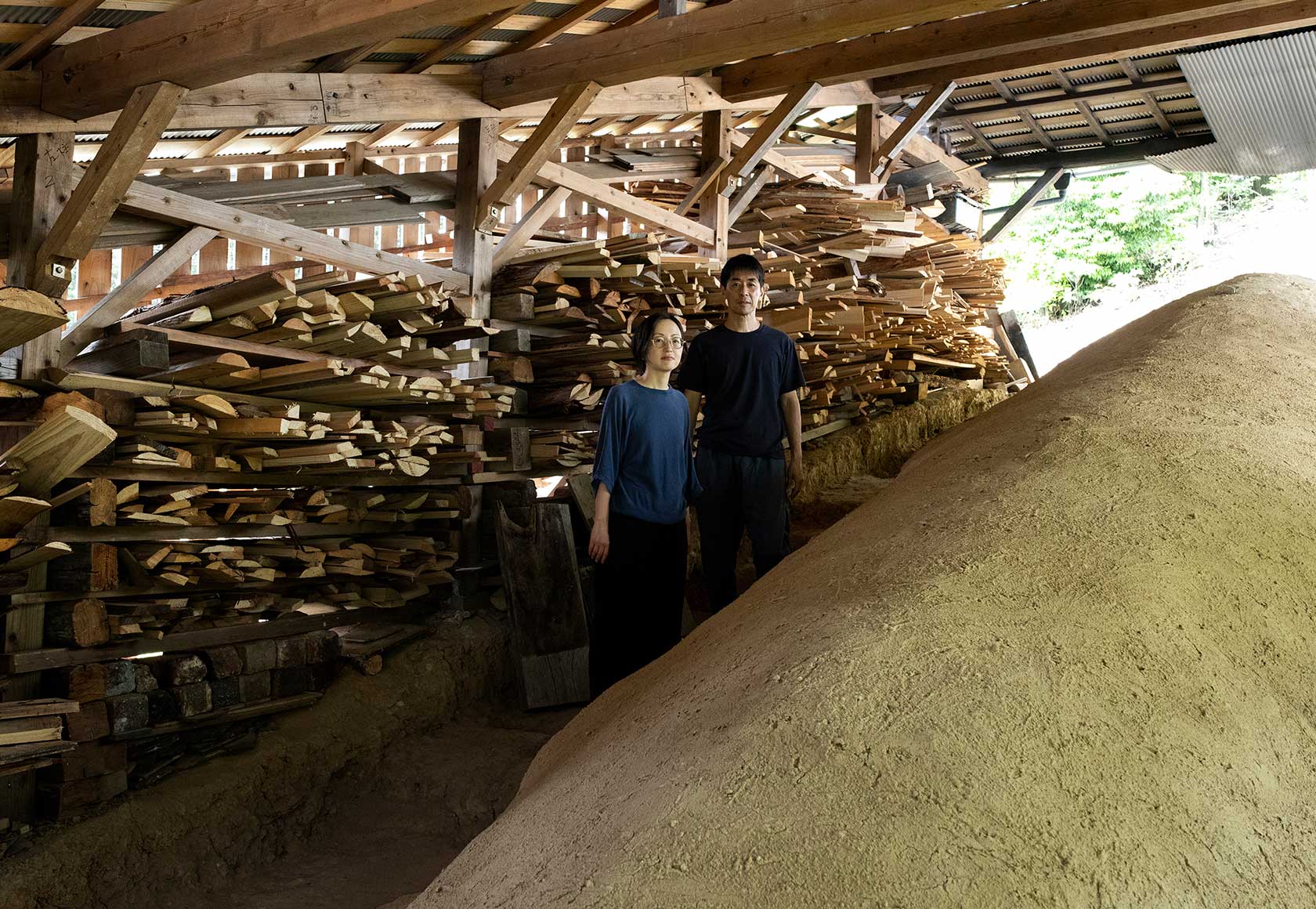
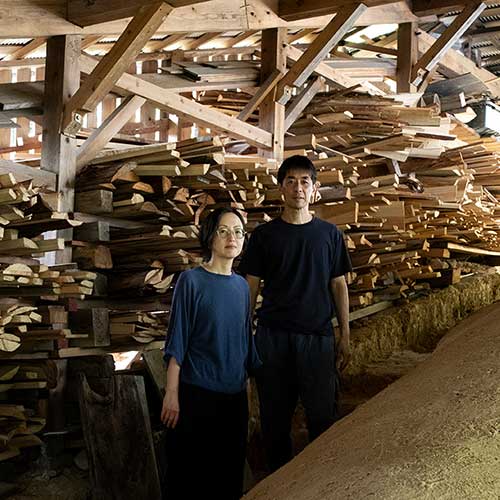
The first porcelain in Japan is said to have been produced in Arita in the 1610s, over four hundred years ago. Near the home and studio that Ryōhei and Yuki share lies the site of what is considered the oldest kiln in Arita. When Ryōhei spoke of “the beautiful things that surround him,” he was likely referring to this ancient kiln site and all that unfolds from it.
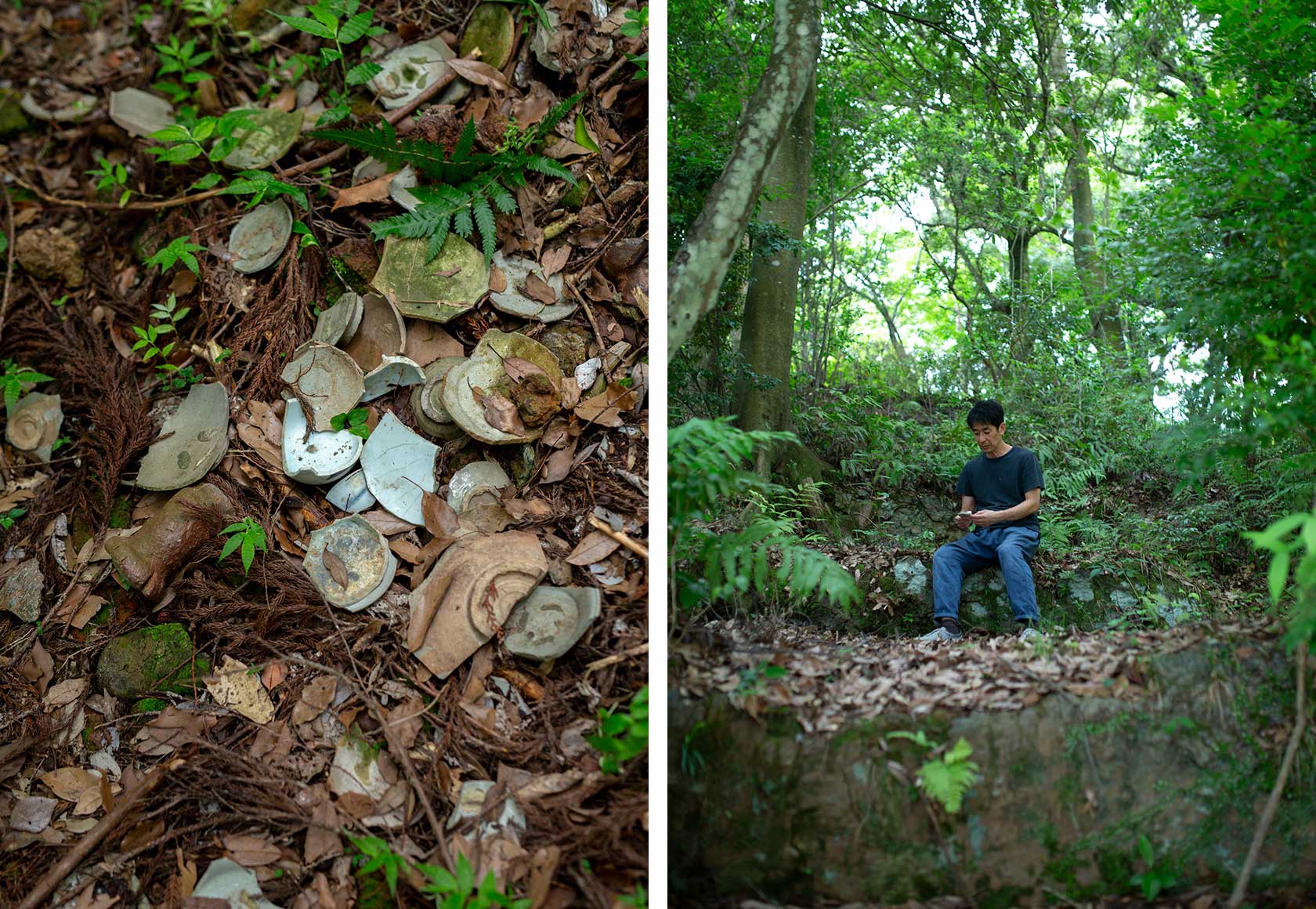
Curious to see shards from that time, we followed the couple to the old kiln remains. Tucked away in a quiet corner, countless fragments of broken vessels lay scattered, layered into the soil and grass. Though these fragments were discarded as failed pieces, some still retained a surprising freshness—hard to believe they had been lying here for over four centuries.
The white stone used to make porcelain, known as tōseki, was discovered by Korean potters who came to Japan during Toyotomi Hideyoshi’s invasions of Korea. Before that, brown stone was crushed to produce Karatsu ware. Once the region began yielding high-quality white stone, brown Karatsu ware faded away, and Arita grew into a center of porcelain production. At the site of the old kiln, fragments of both brown and white ceramics remain mixed.
“People often say Karatsu is pottery and Arita is porcelain, but the idea of separating pottery and porcelain only came about during the Meiji period (1868–1912)” Ryōhei explains. “Back then, I think people didn’t care so much about the type of clay—whether it was porcelain stone or potter’s clay. To them, it was probably just a matter of brown stone or white stone.”
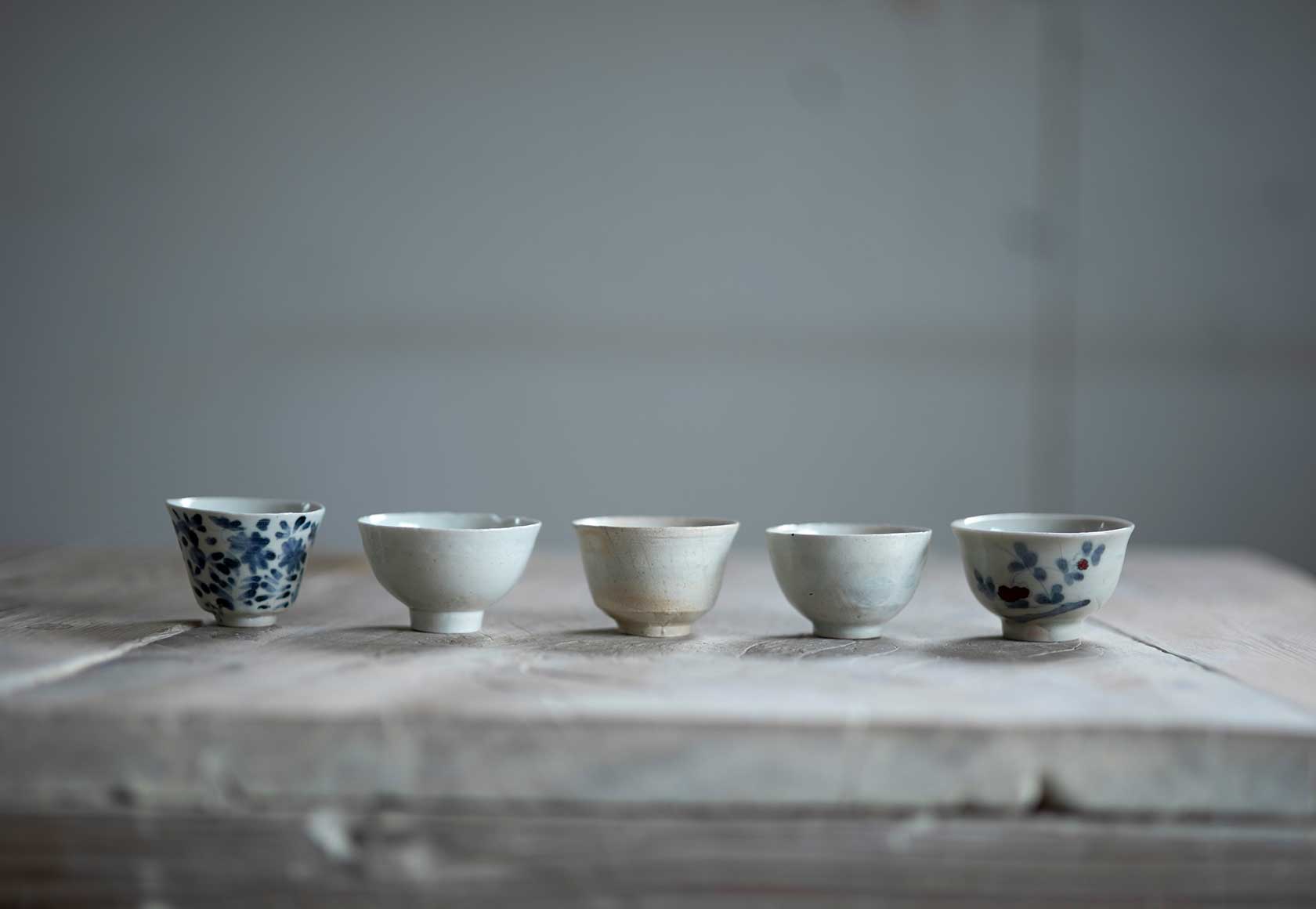
Things we take for granted today can look quite different when we trace them back to their origins. Over time, Ryōhei and Yuki began to see the old kiln beside them with renewed interest. Around 2009, they started researching and replicating old works from around the time porcelain first emerged, refining their techniques through this process and gradually developing a style that became uniquely their own.
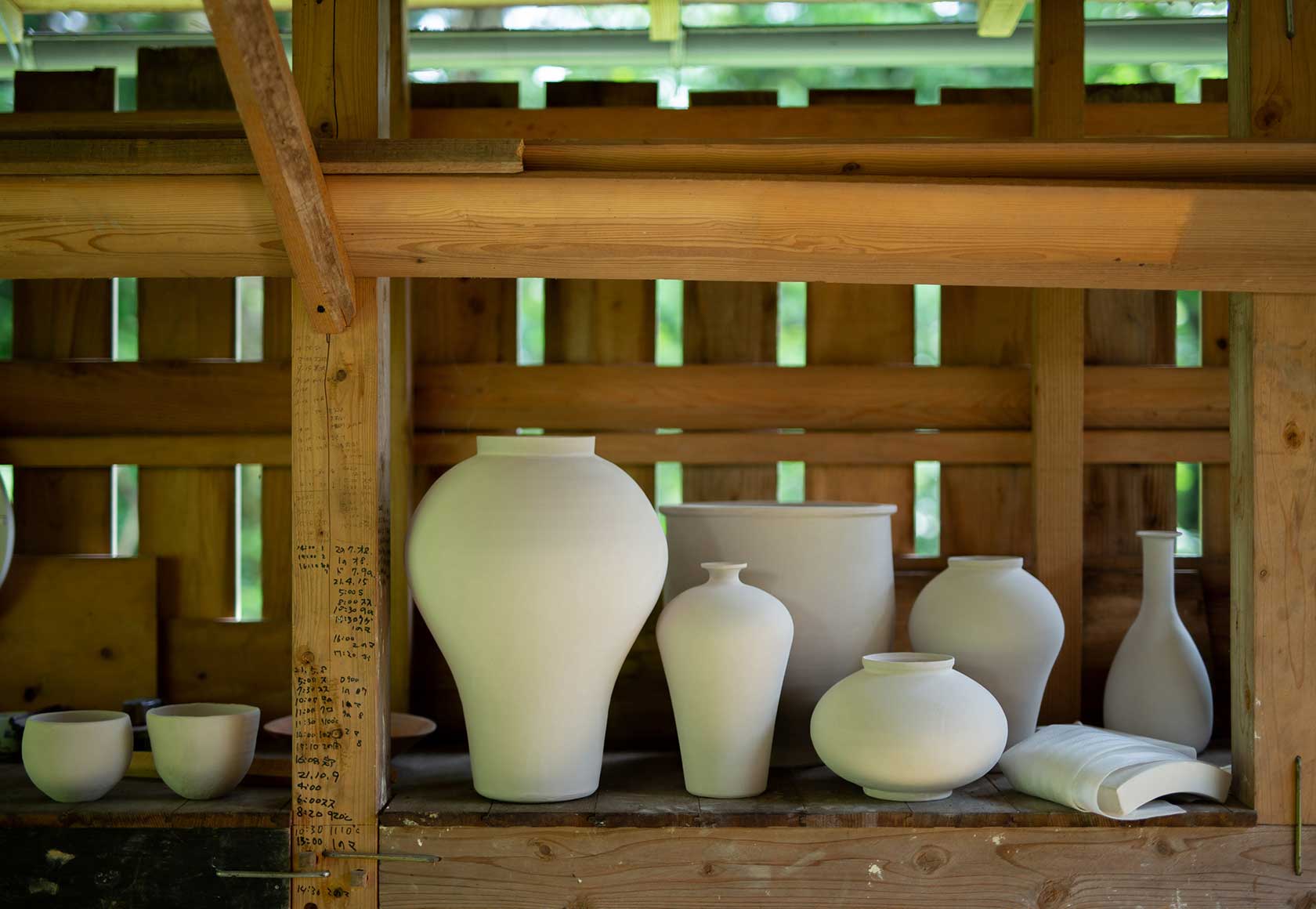
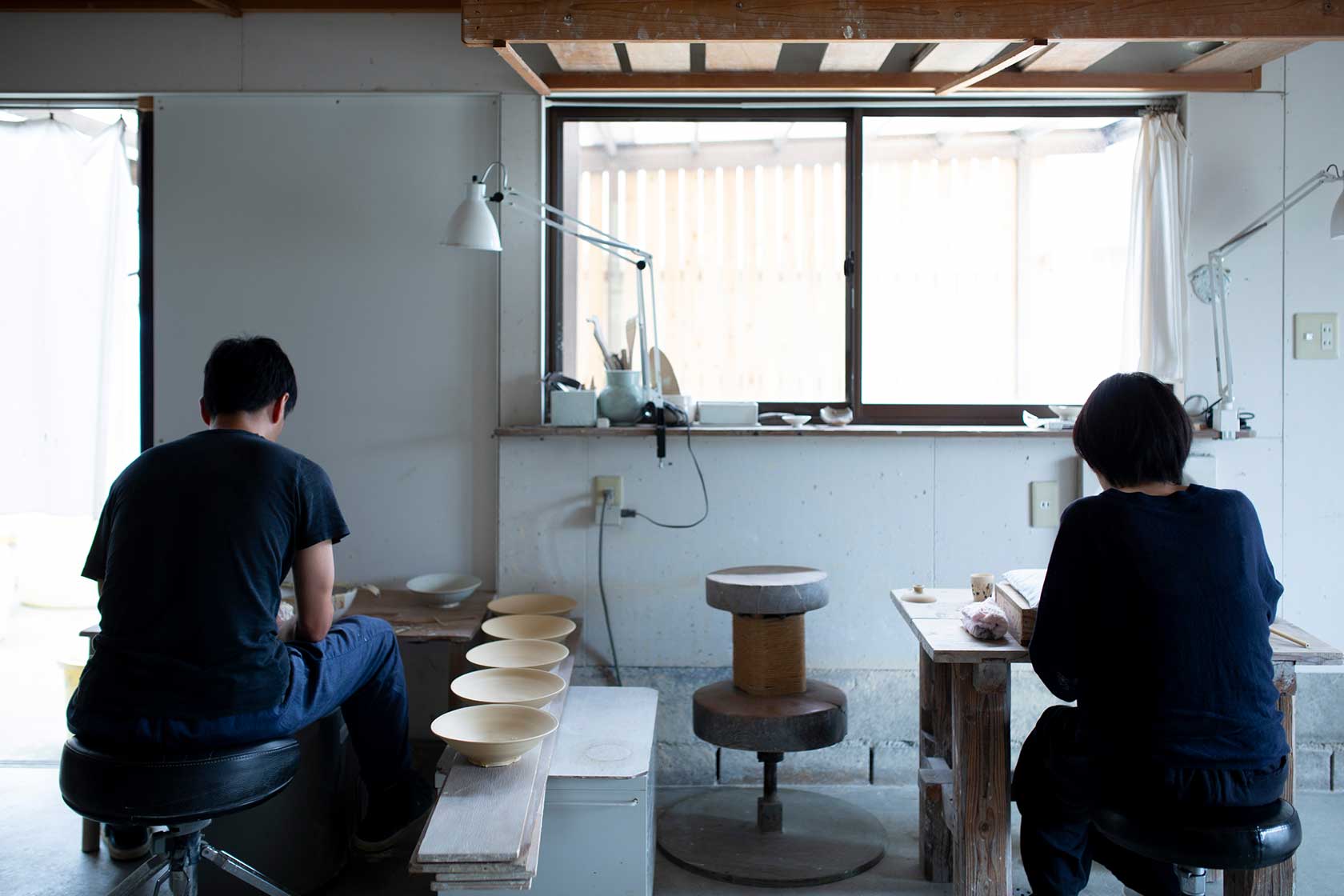
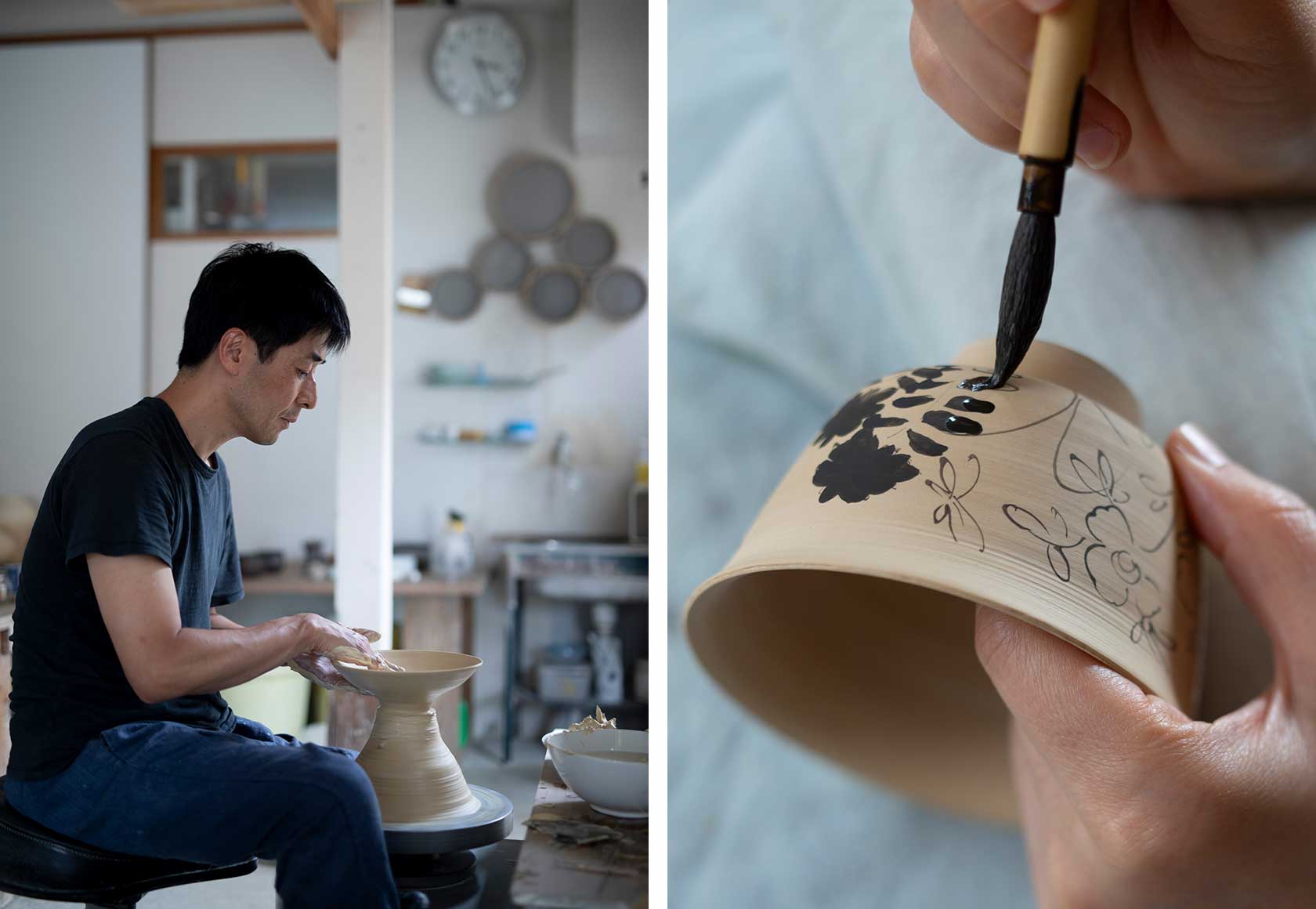
Ryōhei and Yuki work side by side at a shared table. Ryōhei handles the material preparation, wheel-throwing, and glazing, while Yuki oversees the painting. Unlike most pottery, which is bisque-fired before glaze application, they use a method called namagake, in which the glaze is applied directly without a first firing.
“I paint before the glaze is applied. Since we skip bisque firing, the surface stays moist, making it easier to paint with a brush,” Yuki explains. “The early Imari ware that we find truly beautiful often has slight brush unevenness. When the clay body is moist, that kind of effect happens naturally—without trying.”
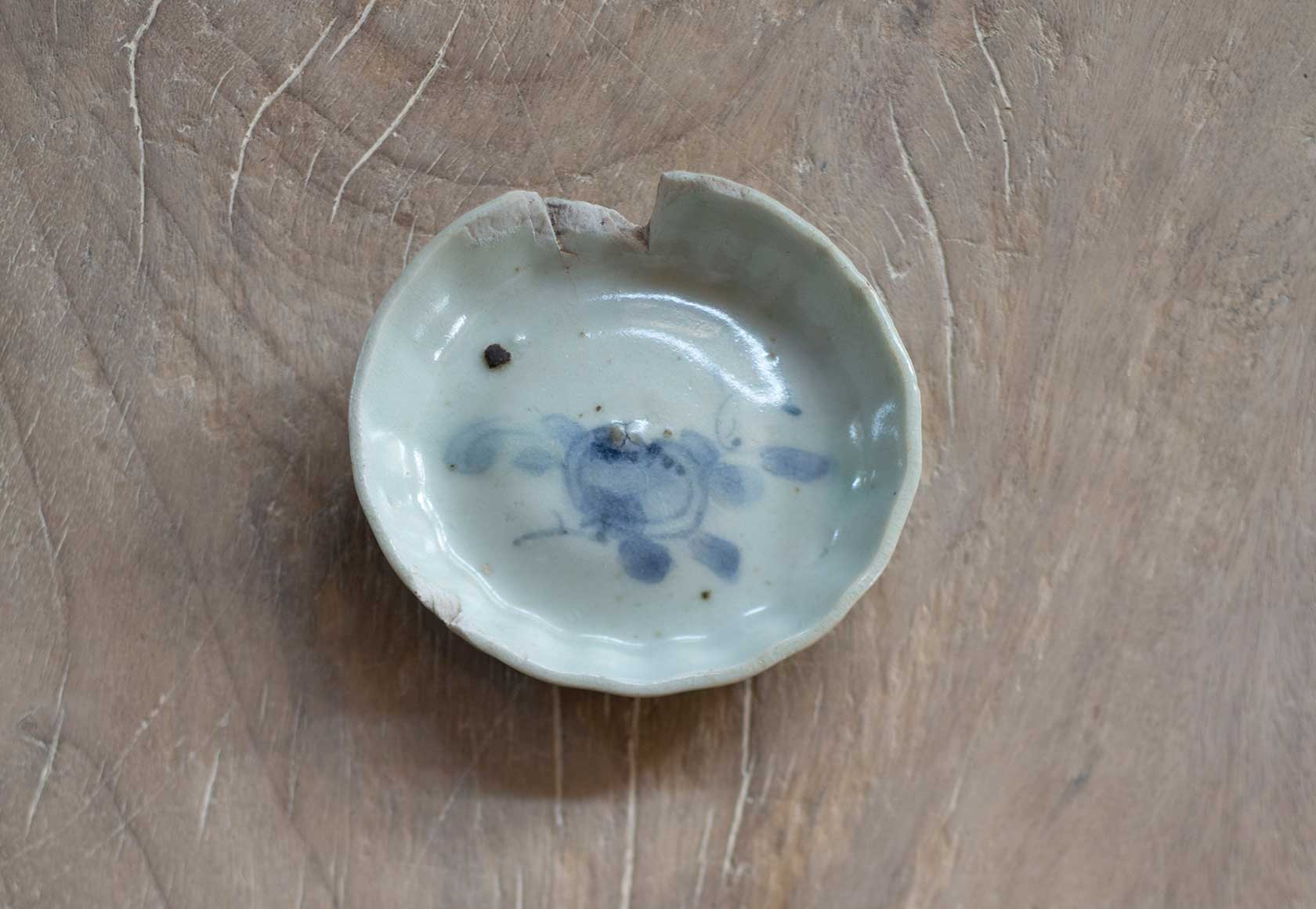
They showed us one of their cherished early Imari pieces: a small dish, slightly chipped, made using the namagake technique.
“There’s a softness to it,” says Ryōhei. “The painting catches your eye first, but you also can’t help but notice the glaze. The glaze, the painting, and the clay all feel unified—like they’re breathing together. It has this airiness to it. I really love this piece,” he adds with a smile.
When painting on bisque-fired clay, the surface absorbs moisture immediately, requiring the use of a lot of water. But when too much water is used, the surface becomes evenly wet, making it difficult to achieve the uneven brush texture seen in early Imari ware. You can often tell whether a piece was made using the namagake technique or was bisque-fired first just by looking at how the paint appears on the piece.
“My husband started asking me to paint in that style, like the old ceramics,” Yuki says with a laugh. “Living here has made me reflect more deeply on older pieces, and it’s really changed how I approach painting.”
By painting on unfired clay, Yuki finds that her work gains character. She also enjoys experimenting with brush thickness and the pressure of her strokes to match the style of painting she wants to achieve.
Ceramic Artist. Born in Tokyo in 1972. Graduated from the Department of Painting (Oil Painting Course), Tama Art University in 1998. Completed a short-term training program at the Arita College of Ceramics in 2000. Established his studio in Arita, Saga Prefecture, in 2006. In 2020, he built the Komononari-gama, a split-bamboo-style earthen kiln, in Arita.
Ceramic Artist. Born in Nagasaki in 1978. Completed a short-term training program at the Arita College of Ceramics in 2000. Worked for three years as a red overglaze painter at a Nabeshima ware kiln. Established her studio in Arita in 2006. In 2020, together with Yamamoto, she built the Komononari-gama, a split-bamboo-