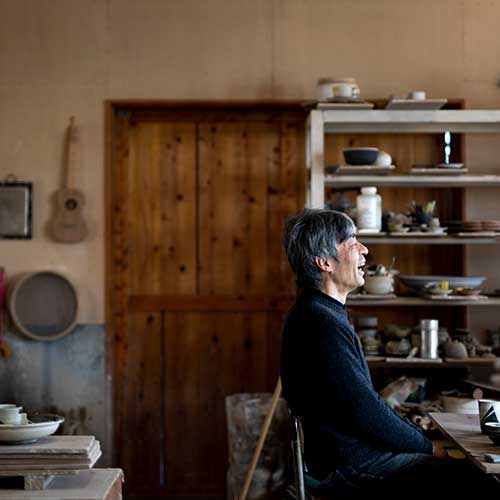
“Connecting with people through objects is wonderful. It has always been one of my driving forces.”
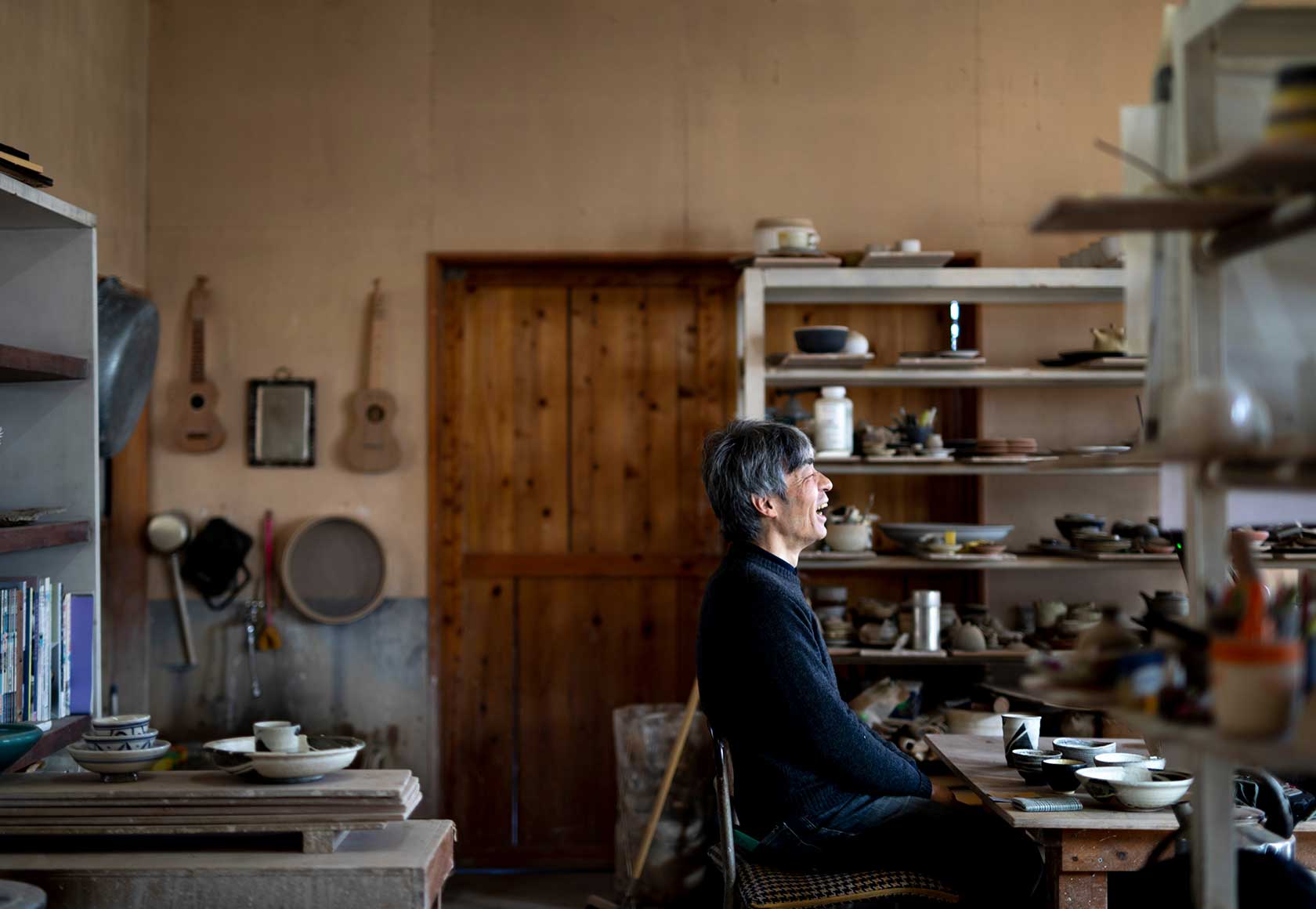
Nukaga Akio speaks with a gentle expression and a clear voice. Having practiced ceramics for thirty-five years, he reflects with a laugh, “I have updated my craft along with the times.”
His journey has been shaped by numerous encounters and connections, each bringing a new beginning to his creative work.
Born in Tokyo, Nukaga studied dyeing at art university and then worked in large-scale set design for exhibitions and fashion shows.
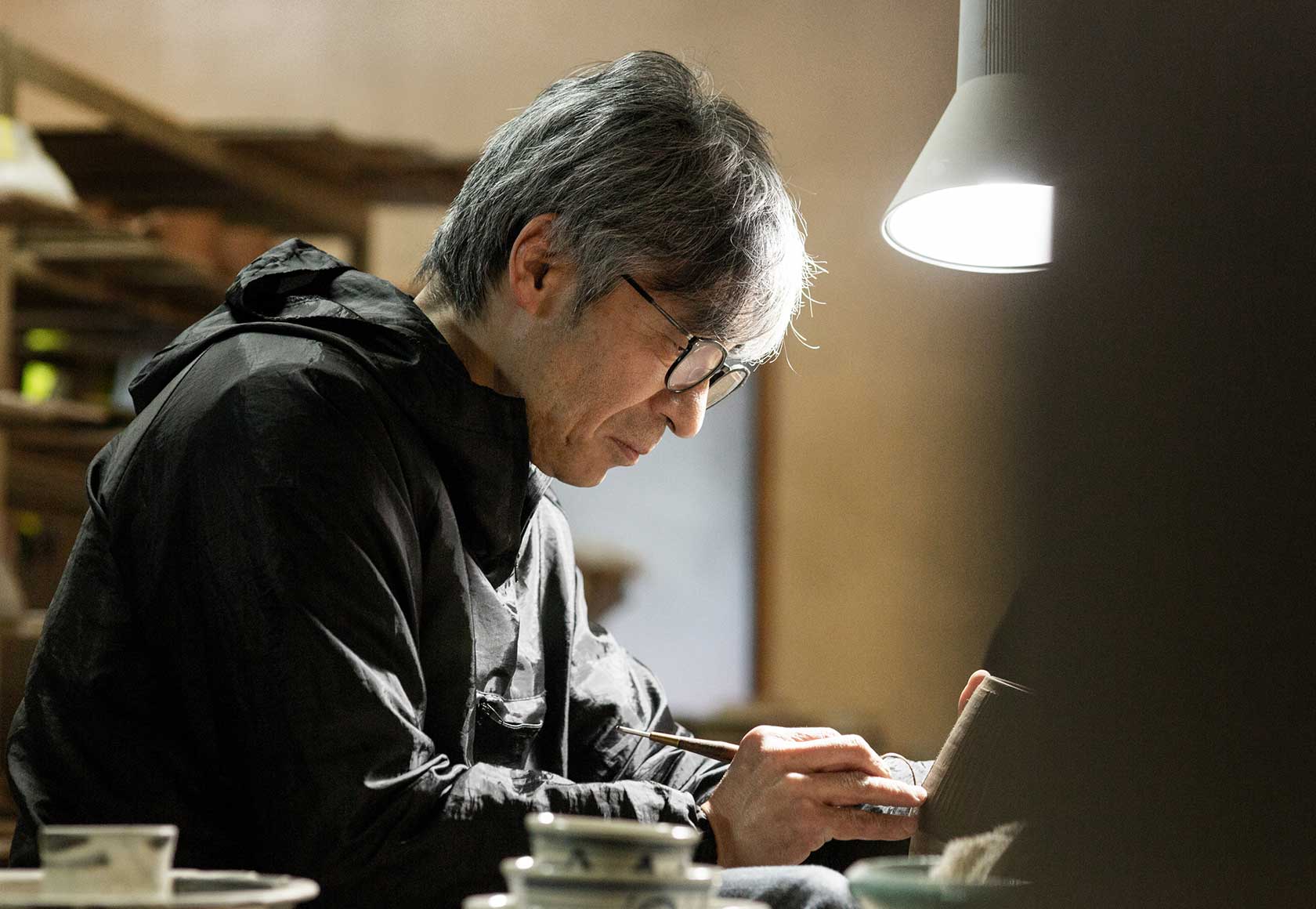
“I enjoyed that work and felt happy, but I also longed for a job where I could work steadily on my own. That’s why I came to Kasama—because I wanted to become a craftsman.”
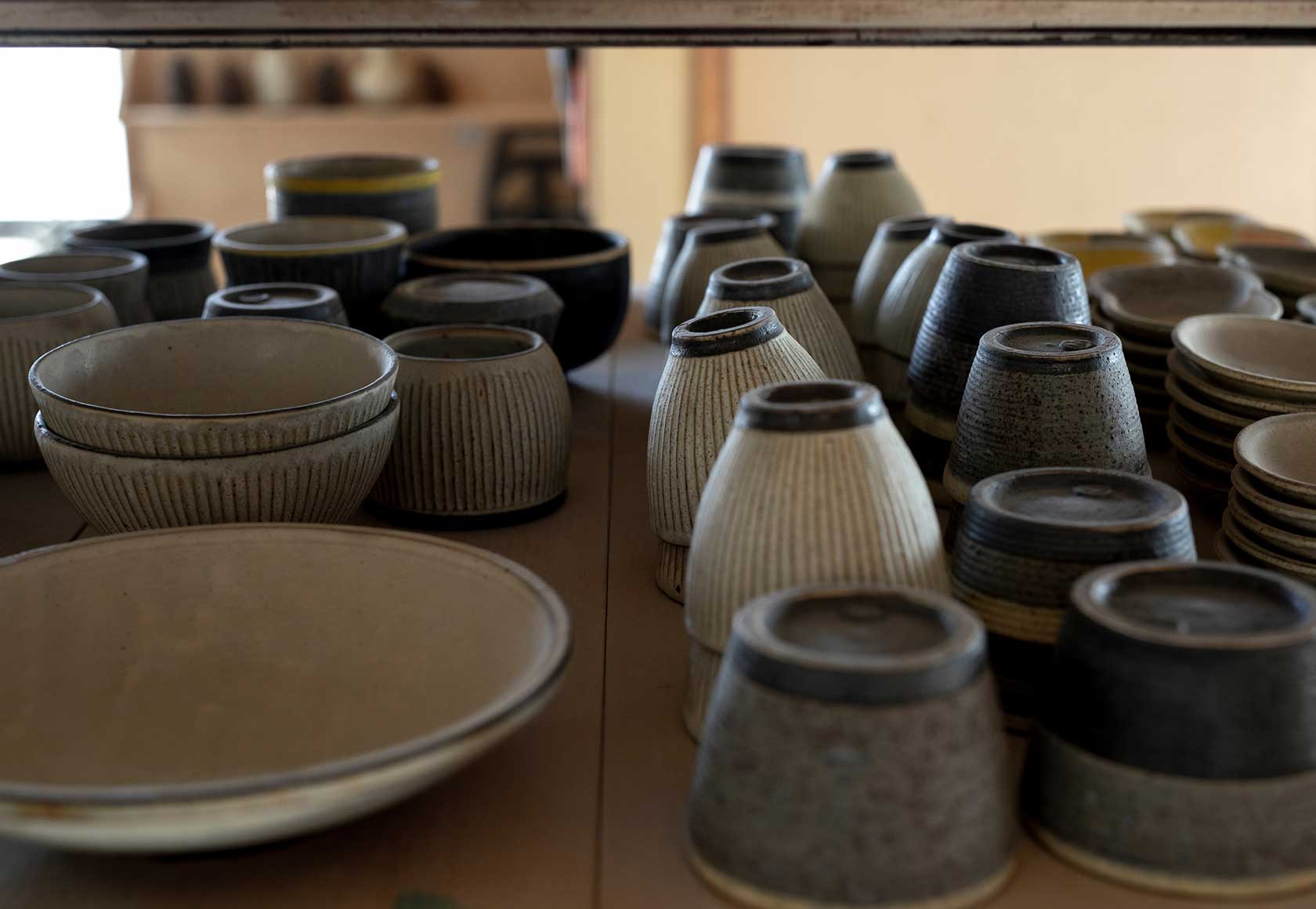
After studying at the Pottery Training Center in Kasama, he apprenticed at the Kouzan-gama Kiln. His master was a skilled craftsman specializing in functional vessels such as yunomi (teacups), kyūsu (teapots), and meshiwan (rice bowls).
“It was the bubble era, though I was hardly aware of it as I lived and worked on-site. Side by side with my master, making vessel after vessel, I absorbed the skills almost through my skin.”
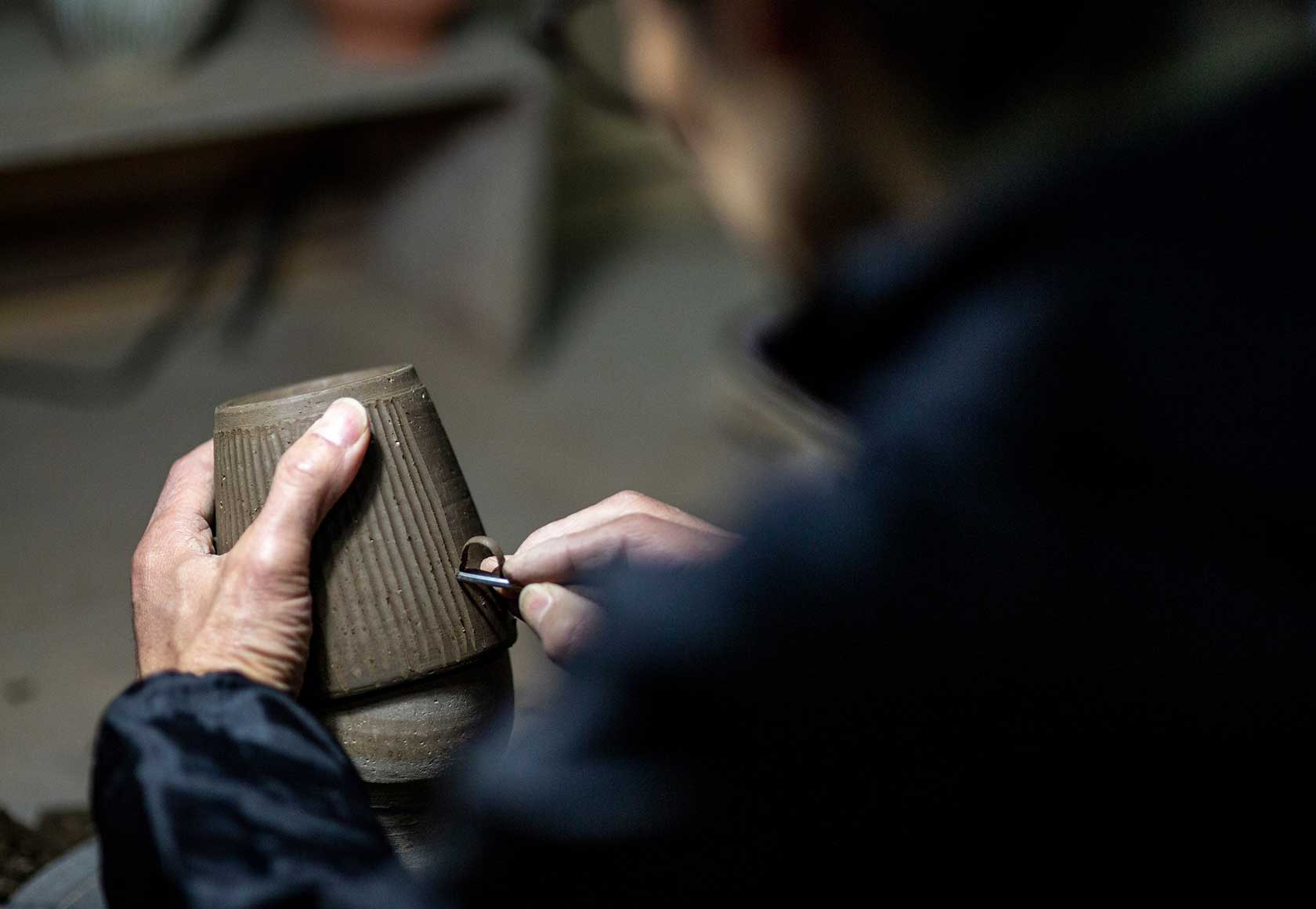
About four years into his apprenticeship, Nukaga decided to marry his fellow trainee, Masako, and became independent. At first, he decorated vessels by painting patterns or carving them and applying colored glazes. As a student, Nukaga learned stencil dyeing and silk-screen printing under Yotsumoto Takeshi, a disciple of dyeing artist Serizawa Keisuke, and enjoyed creating patterns.
“But painting patterns didn’t really suit me—I couldn’t stand it. As a maker, you learn to adjust your work to your own nature. When I thought about how to make things easier for myself, I found that working with shirogeshō (white slipware) came most naturally to me.”
Shirogeshō involves applying a layer of white slip over the clay body. At first, Nukaga used glossy glazes on top of the slip, but later switched to matte finishes, which helped him better understand his own preferences.
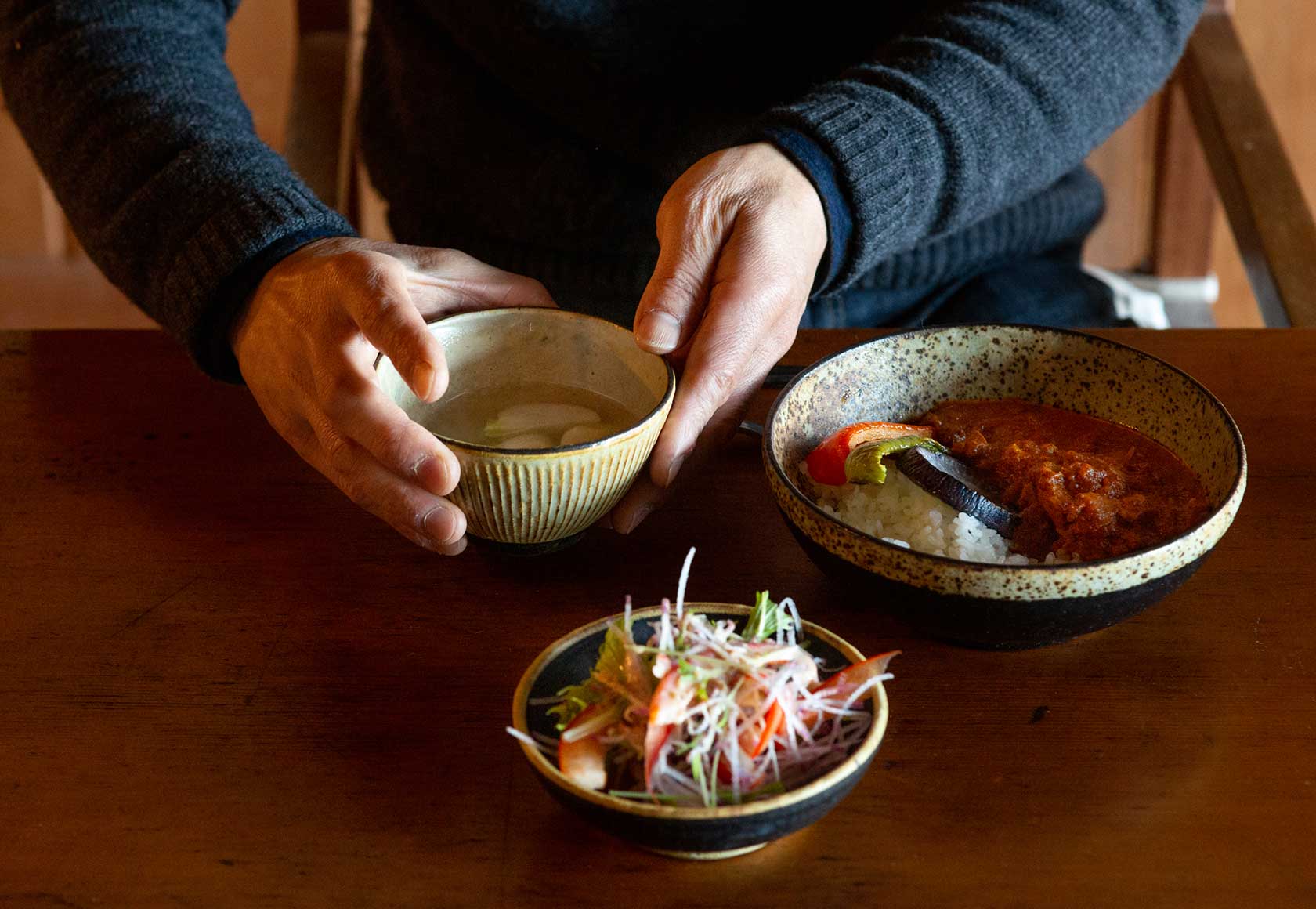
“I realized this is the kind of work that makes me happy. I’ve always loved old things and collected antique vessels like Old Imari ware and Kurawanka bowls. When I used those on my table, I began to think how nice it would be to create pieces that could harmonize with them.”
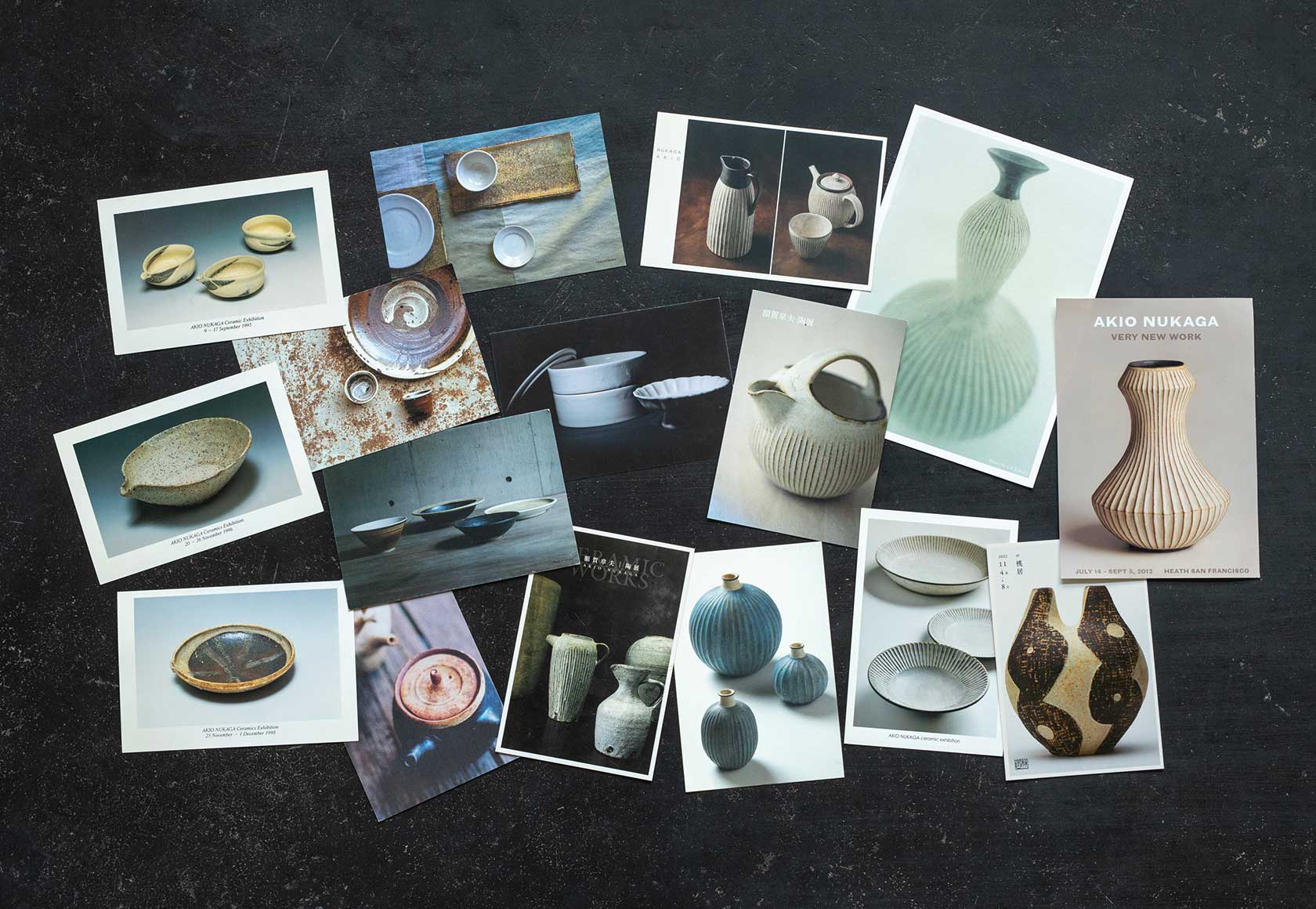
His first solo exhibition was in 1995. The postcard invitation featured a katakuchi (spouted pouring vessel) with flowing shirogeshō.
Around that time, Nukaga met Ōshima Fumihiko, the owner of Rozan, renowned ceramics shop in Nishi-Ogikubo, Tokyo. Rozan was famous not only for its selection of ceramics and antiques, but also for hosting exhibitions of contemporary artists.
“One day Ōshima suggested, ‘Why don’t you try roughening up the clay a bit?’ When I tried it, the atmosphere of the work changed completely. It led to many discoveries about how to bring out the expressive qualities of the clay.”
While chatting and looking at antiques with Ōshima, Nukaga recalled a visit to the Japan Folk Crafts Museum during his student years.
“I was eighteen at the time. It was the 10th anniversary of Okinawa’s reversion to Japan, and there was an exhibition on Okinawan art. In 2022, there was also the 50th anniversary exhibition, ‘Beauty of Okinawa.’ The folk craft pioneers, including Yanagi Muneyoshi, saw in Okinawa a society where makers’ works were deeply integrated into daily life—truly a utopia. That exhibition left a strong impression on me, and it was the origin of my fascination with everyday tools.”
In the midst of mastering the technique of making functional wares, Nukaga recalled certain thoughts that had been forgotten. Remembering them, he began experimenting extensively with slip decoration and glaze.
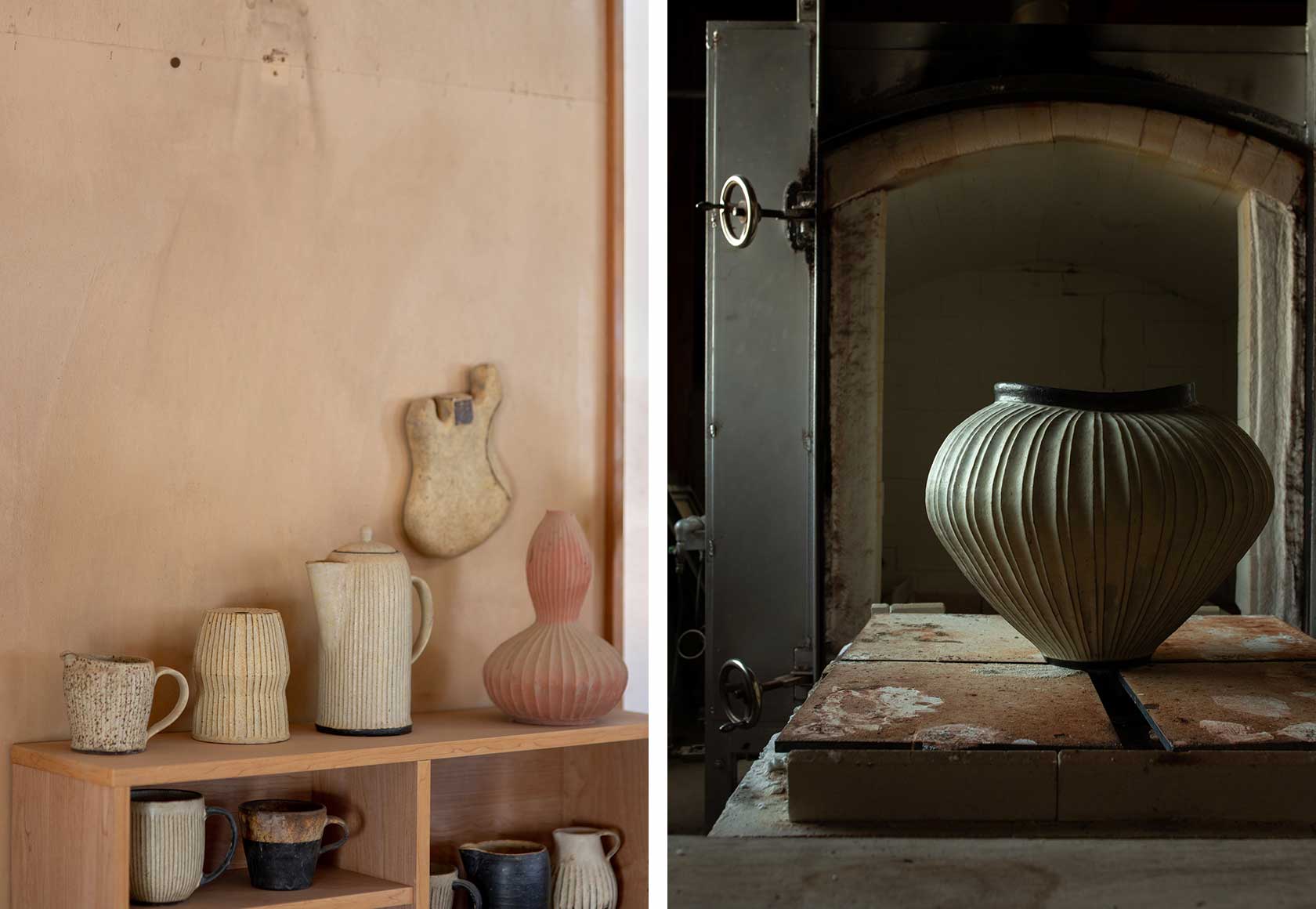
“I mixed lots of iron powder into the clay, deliberately cracked the white slip surface, and even switched to using different clays—trying everything I could. Through this process, I developed what I call goma-kohiki (sesame glaze) and sabi-kohiki (rust glaze). I grew very fond of their expressive surfaces.”
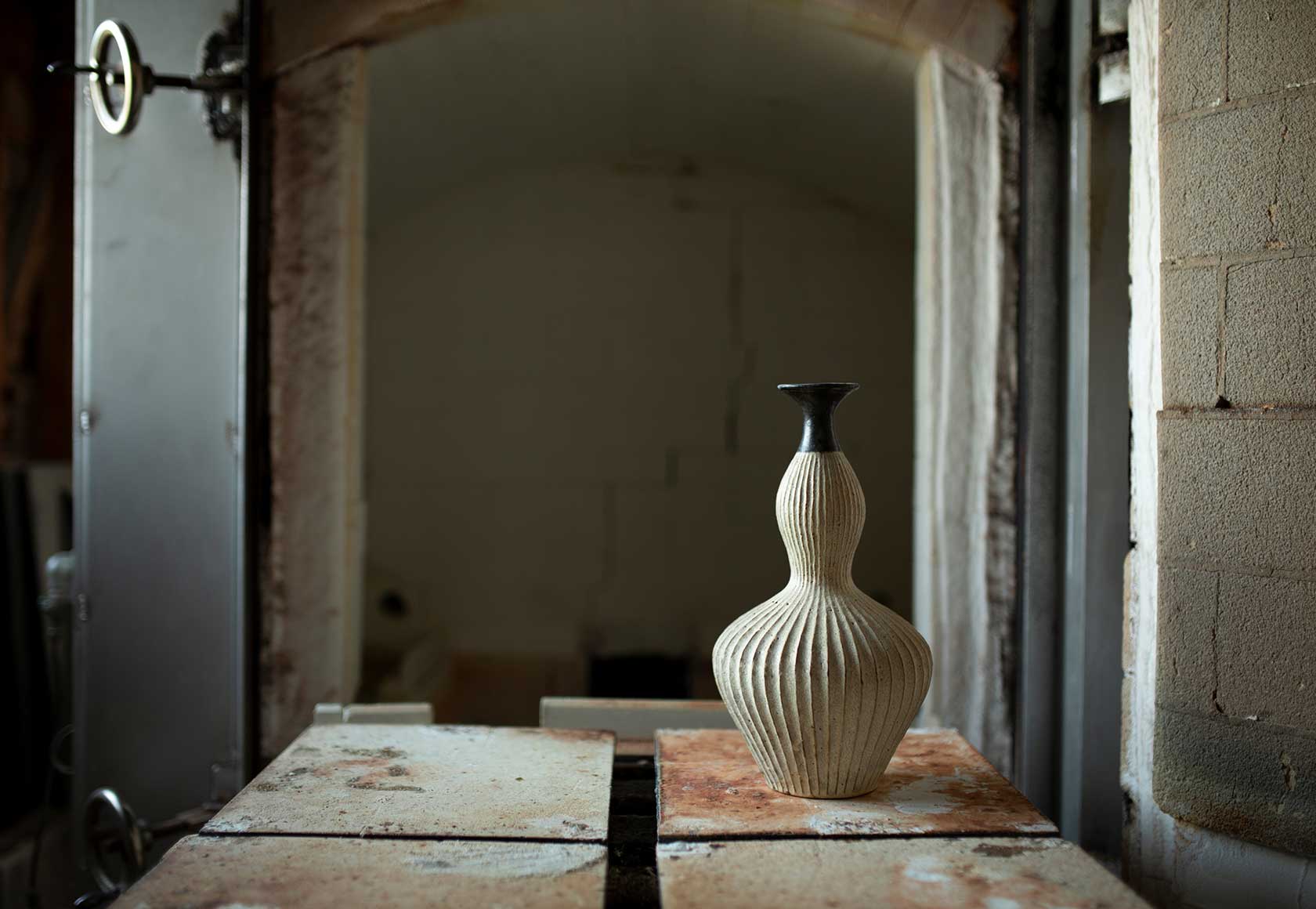
Although he admired wood-fired kilns, he patiently sought out these surface effects with his gas kiln.
“In kohiki (white slipware), the shirogeshō and glaze fuse together, allowing the clay body underneath to either disappear or show through in subtle ways. It’s fascinating.”
Ceramic Artist. Born in Tokyo in 1963. Graduated from the Department of Design II (TextileDesign), Faculty of Zokei, Tokyo Zokei University, in 1985. Completed Wheel-Throwing Course, Industrial Technology Institute of Ibaraki Pottery Training Center in 1988. Apprenticed at the Kouzan-gama Kiln in 1989. Established his independent studio in Kasama, Ibaraki Prefecture, in 1993. Founder of N Ceramic Studio. He pursues simple, timeless ceramic designs. From the process of making ceramics, he draws design inspiration and translates it into various styles, such as his Pleated Work and Block Print series, as well as sabi-kohiki (rust glaze).